

Kalapana Orchid Farm
Brassocattleya Walter August (B. nodosa x C. Summer Spot)
Brassocattleya Walter August (B. nodosa x C. Summer Spot)
Couldn't load pickup availability
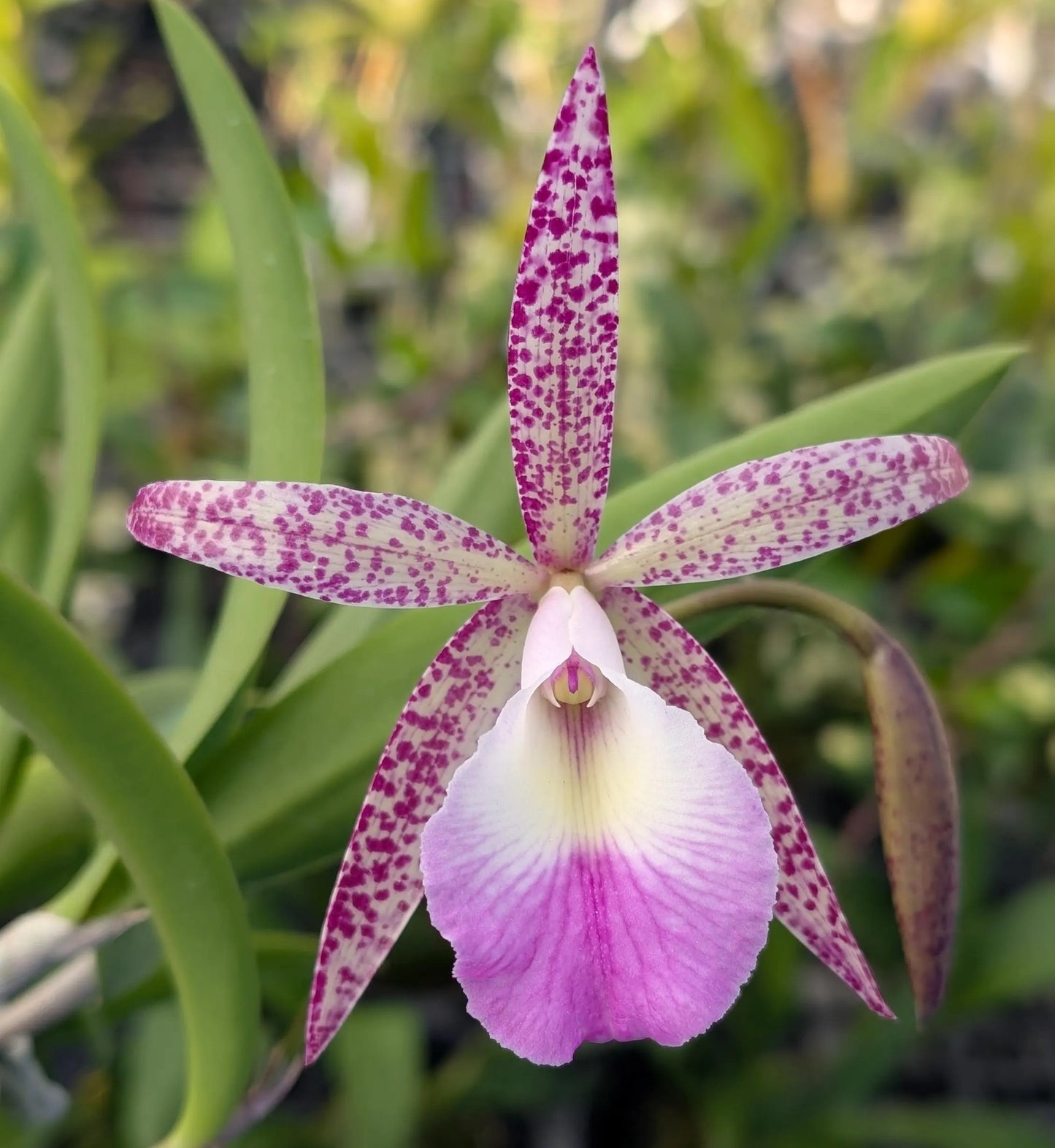
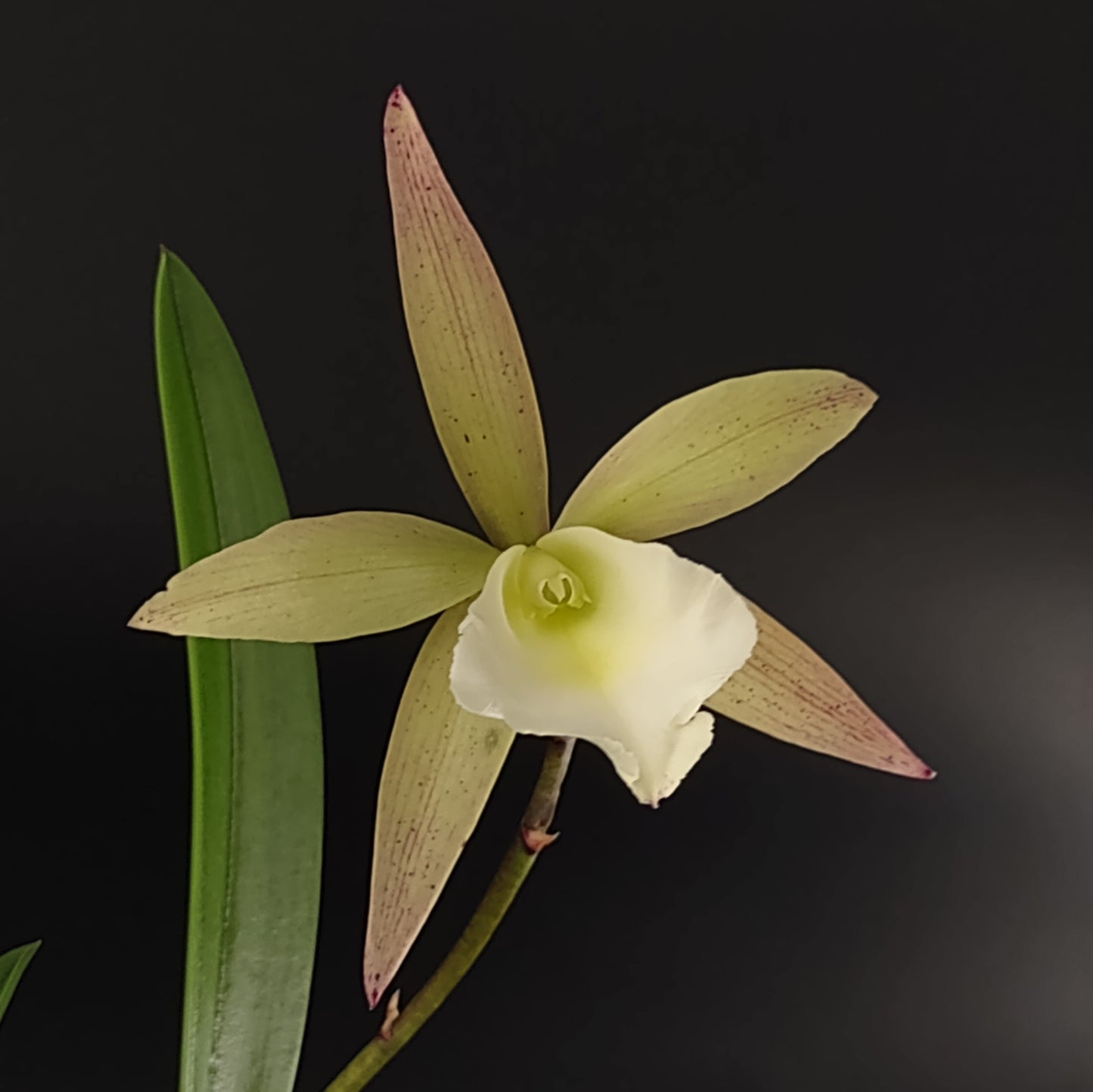
This exceptional hybrid, properly registered as Brassocattleya Walter August (or Bc. Walter August), combines the star shape and nocturnal fragrance of Brassavola nodosa with the striking color and form of Cattleya Summer Spot. The flowers are medium-sized and appear in clusters of two to five blooms on a single inflorescence. The petals and sepals are typically a beautiful creamy white to pale pink or lavender, contrasting sharply with a prominent, flaring lip that is often speckled or blushed with pink, magenta, or a deep sunset orange, a trait inherited from the Cattleya parentage. The shape is famously star-like, and it releases a sweet, strong, citrus-like fragrance primarily in the evening. The plant exhibits semi-terete foliage that is upright, stiff, and leathery, typically reaching lengths of 8 to 12 in. This is a sturdy and forgiving hybrid suitable for a wide range of growing conditions.
Quick Start Summary:
Light: High light is required for best flowering, ideally bright, filtered sun for several hours a day.
Temps: Intermediate to warm conditions. Day temperatures from 70 to 85 F, dropping 10 to 15 F at night.
Water: Allow the potting media to dry out almost completely between thorough waterings.
Humidity: Moderate humidity, 50 to 70 percent, is sufficient. Excellent air circulation is mandatory.
Fertilizer: Apply a balanced fertilizer at 1/2 strength every second or third watering during active growth.
Media: Coarse, fast-draining media like medium-grade orchid bark mixed with charcoal and perlite.
🌺 Orchid Lore & Discovery This hybrid is officially registered as Brassocattleya Walter August. It is a cross between Brassavola nodosa and Cattleya Summer Spot. The Brassavola nodosa parent is native to Central America and Mexico, often called the "Lady of the Night" orchid for its signature star-shaped, night-fragrant white flowers. The Cattleya Summer Spot parent, itself a cross between Cattleya Summer Stars and Cattleya aclandiae, contributes the potential for vibrant, often spotted color patterning and a fuller lip shape. This cross was made to create a rewarding, compact grower that offers unique color variation and the sought-after evening fragrance, making it a reliable performer for beginners and experienced hobbyists alike.
🌿 How to Grow Brassocattleya Walter August
Light: This hybrid requires bright light to bloom reliably, similar to that provided to a standard Cattleya. Provide several hours of direct morning sun or bright, filtered light throughout the day. Under ideal light, the leaves should be a light green color, and too little light will result in dark green foliage and poor flowering.
Temps: Grow in intermediate to warm conditions. Ideal daytime temperatures range from 70 to 85 F. The nighttime temperature drop is beneficial for setting flower buds and should be 10 to 15 F cooler than the day temperature, but ensure night temperatures do not drop below 60 F for extended periods.
Water: The thick, succulent leaves and roots of this plant indicate it can handle a slight drying period. Water thoroughly and then allow the media to become dry, or nearly dry, before watering again. This hybrid is much more tolerant of drying out than of sitting in soggy media, which will quickly lead to root rot.
Humidity: Maintain humidity between 50 and 70 percent. While it tolerates lower humidity levels, it thrives when humidity is adequate, especially in combination with the high temperatures it prefers. Air movement must be strong and consistent to prevent moisture buildup and disease.
Fertilizer: Feed regularly during the active growing season (spring and summer) using a balanced, water-soluble orchid fertilizer at a strength of about 1/2 the recommended rate. Reduce fertilizer frequency and strength during the winter months when growth naturally slows down.
Media: Use a coarse, well-aerated, and quickly draining potting media. A mix of medium-sized fir bark, lava rock, and charcoal is excellent. The roots should be allowed to dry quickly after watering. Given the plant's growth habit, mounting on a plaque is an excellent option, though mounted plants will require daily watering.
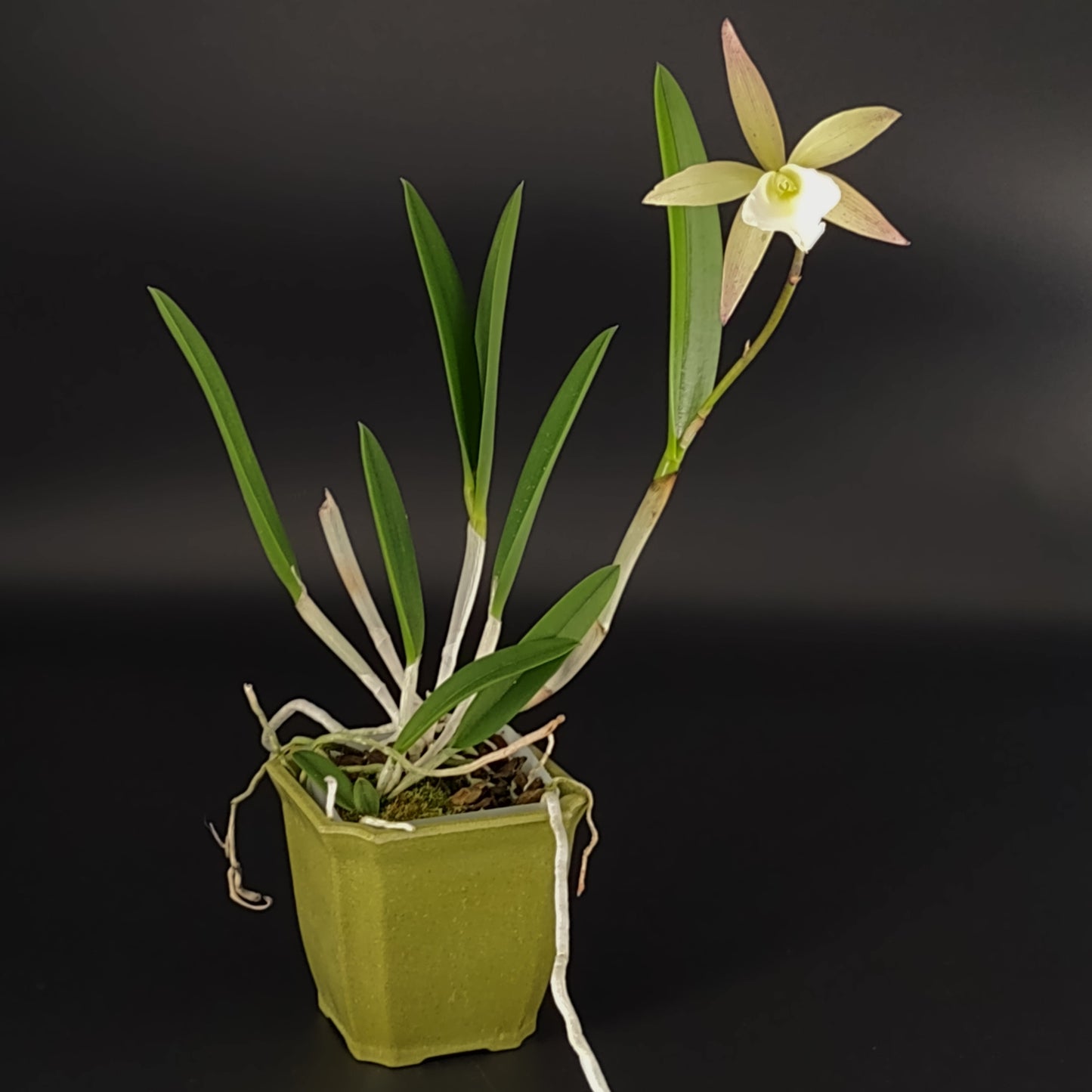
Mature, blooming-size plants, overflowing their 4" pots, ready to be up-potted!
Share