
Kalapana Orchid Farm
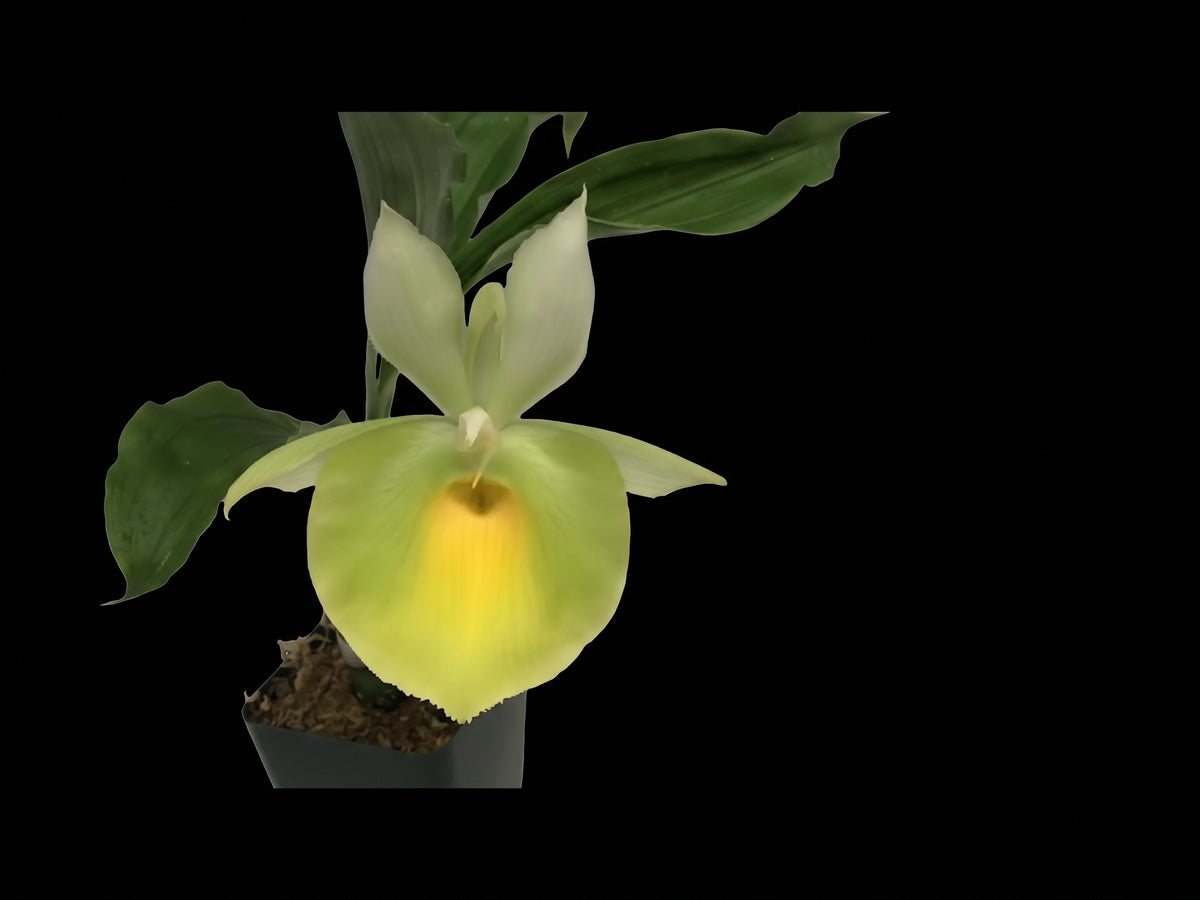
Ctsm. pileatum 'Jumbo Green Gold'
Ctsm. pileatum 'Jumbo Green Gold'
Couldn't load pickup availability
A Pure Chartreuse Catasetum with Unmistakable Presence
A select clone of the legendary botanical species, breeding true for glowing, lime-to-gold flowers that stop folks cold on the greenhouse bench. It grows fast, eats heavily through summer, and drops its leaves for a well-earned winter nap.
Each flower opens in a clear, luminous apple-green to soft chartreuse, dominated by an oversized, deeply saccate lip that sits like a tiny inverted helmet. The waxy, thick-substanced petals curve inward around the column, framing a bloom that looks less like a standard orchid and more like a neon-green helmet perched waiting for a tiny driver.
Catasetum pileatum 'Jumbo Green Gold' gives you everything collectors love about the Catasetinae alliance: explosive growth speed, flowers that look sculpted out of wax, and a winter dormancy that frees up precious bench space when other plants are crowding your lights. When this plant hits its summer stride, you can practically watch the pseudobulbs expand day by day. It blooms on mature, leafy bulbs in late summer or fall, throwing arching spikes that carry a heavy fragrance reminiscent of sweet wintergreen and eucalyptus. If you enjoy plants with personality and a clear seasonal rhythm, this line is hard to beat.
Quick Care Guide
-
Light: High, bright light while in active growth; leaves should maintain a light lime-green color.
-
Water: Heavily and constantly while leaves are growing; cut off completely when leaves drop in late autumn.
-
Temperature: Nights 62–68°F, days 75–90°F. Warmth during the summer growing season is essential.
-
Fertilizer: Heavy feeding with a balanced orchid fertilizer twice a week while in active leaf.
-
Mature size: Pseudobulbs reach 10 to 14 inches; arching flower spikes extend 12 to 18 inches.
The Story of Catasetum pileatum
Catasetum pileatum makes its home in the warm, humid lowlands of northern South America, sprawling across Trinidad, Venezuela, Colombia, and the Amazon basin of Brazil. It grows primarily as an epiphyte on palms and riverine forest trees below 1,500 feet elevation, where intense tropical heat and torrents of wet-season rain give way to a distinct, bone-dry dry season.
The species was first described by Heinrich Gustav Reichenbach in 1886. For decades, orchid collectors argued over various color forms of pileatum, which ranges naturally from off-white and pale ivory to deep red-browns and greens. The species earned a reputation as the showpiece of the genus due to its exceptionally large, bowl-shaped lip and fascinating explosive pollination mechanism, where touching the floral antenna hurls a viscid pollen packet straight at the visitor.
The specific epithet "pileatum" comes from the Latin word for a felt cap or helmet, referencing the distinct cup-shaped lip that dominates the flower.
In cultivation, Catasetum pileatum demands a strict adherence to its seasonal cycle: water and feed relentlessly while leafy, then keep bone dry once winter dormancy sets in until new roots reach two inches long in spring. All plants offered are nursery-propagated.
Share