
Kalapana Orchid Farm
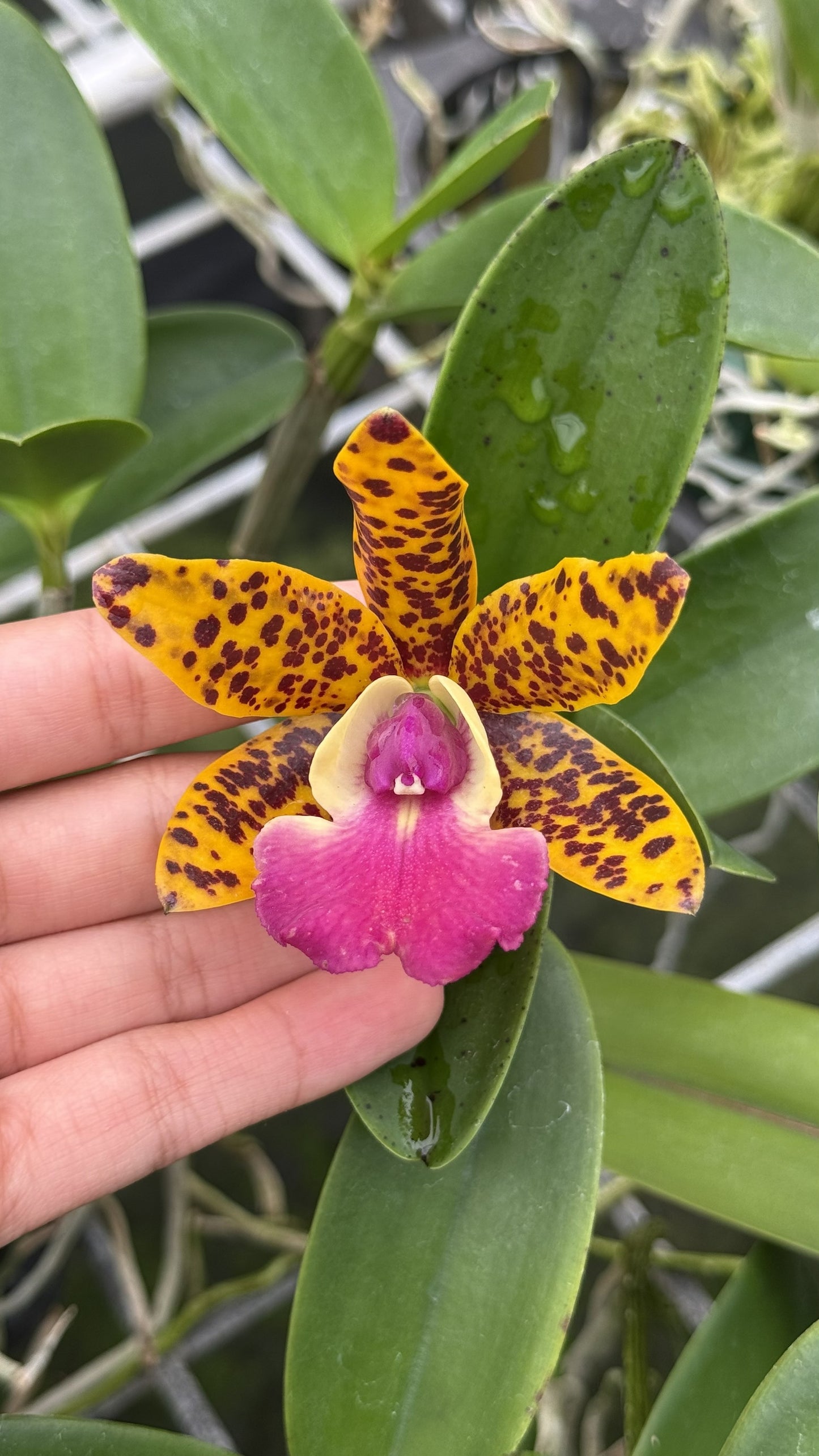
Ctt. Ratsima Spot -mature plant
Ctt. Ratsima Spot -mature plant
Couldn't load pickup availability
For those who crave personality and "fun" in their orchid collection, Ctt. Ratsima Spot is a delightful departure from the traditional. This Cattleytonia hybrid is a showstopper, loved for its charming, waxy flowers that look as if they’ve been meticulously hand-painted. Each bloom features a bright, starry shape with creamy-yellow to pale green petals, all covered in a bold, whimsical pattern of dark burgundy or chocolate-colored freckles. Grown in 4" pot
Why You’ll Love It:
-
Unique Patterning: No two blooms are exactly alike; the "polka-dot" spotting provides a playful, exotic texture that stands out among solid-colored orchids.
-
Compact Growth: Thanks to its Broughtonia heritage, this orchid stays a manageable size, making it perfect for windowsill growers or those with limited shelf space.
-
Waxy, Long-Lasting Blooms: The flowers have a thick, heavy substance, allowing the display to remain fresh and vibrant for several weeks.
-
High Flower Count: It is a prolific bloomer, often producing clusters of several flowers on a single upright spike, creating a "bouquet" effect.
-
Easy Vigor: This hybrid is notably hardy and adaptable, making it an excellent choice for both beginners and seasoned collectors looking for a low-fuss plant.
Quick Care Guide:
-
Light: Bright, filtered light. It enjoys more light than a Phalaenopsis but should be protected from harsh, direct midday sun. An east-facing window is usually perfect.
-
Water: Water once the potting medium feels dry to the touch. It prefers to dry out quickly, so ensure it is planted in a free-draining bark mix.
-
Temperature: Thrives in Warm to Intermediate temperatures, ideally between 65°F and 85°F. It can tolerate warmer days as long as there is good air circulation.
-
Humidity: Enjoys moderate humidity (50% to 60%). If growing in a dry home, a simple gravel tray with water beneath the pot will keep it happy.
-
Fertilizer: Feed with a weak solution of balanced orchid fertilizer every two weeks during the spring and summer months. Progressively reduce feeding during the shorter days of winter.
Share