

Kalapana Orchid Farm
Cyc. Richard Brandon ‘Chocoflan’ x Cyc. Cygnus Atratus ‘Firebird’ AM/AOS
Cyc. Richard Brandon ‘Chocoflan’ x Cyc. Cygnus Atratus ‘Firebird’ AM/AOS
Couldn't load pickup availability
The hybrid orchid known as Cycnoches Richard Brandon Chocoflan x Cycnoches Cygnus Atratus 'Firebird' produces striking, heavy-textured flowers that showcase deep, dramatic color tones. The blossoms frequently exhibit rich shades of chocolate brown, deep burgundy, and dark copper, often accented by a contrasting pale or brightly colored lip. The flowers arrange themselves beautifully along arching or pendant spikes, carrying a strong, sweet fragrance during the brightest hours of the day. Because this orchid belongs to the swan orchid group, it displays pronounced floral dimorphism, meaning the same plant can produce completely different male or female flowers depending on the light and temperature conditions during spike development.
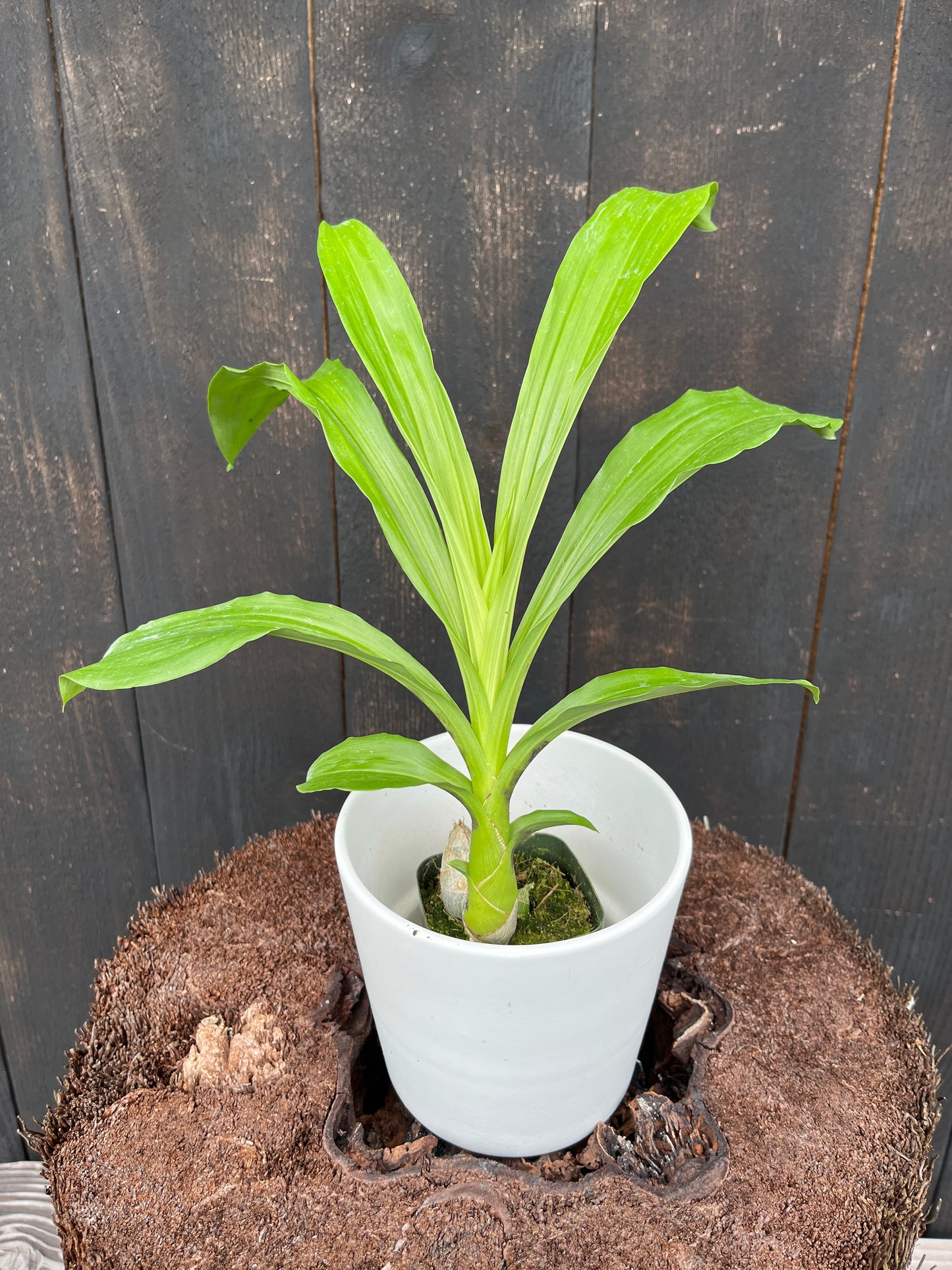
The vegetative structure of this plant consists of sturdy, upright, spindle-shaped pseudobulbs that can reach heights of 10 to 14 in. at maturity. These fleshy stems act as storage organs, holding water and nutrients to support the plant through its seasonal growth cycles. Emerging from the nodes of these thick pseudobulbs are broad, lance-shaped, deeply veined leaves with a soft green coloration. As a deciduous hybrid within the Catasetinae alliance, the foliage naturally turns yellow and sheds completely in late autumn or early winter, leaving behind bare, silvery-green pseudobulbs for the winter rest period.
Quick Start Summary
Light: Bright filtered light, avoiding direct midday sun
Temps: Warm to hot during active growth between 75 and 90 F, dropping cooler during winter dormancy
Water: Heavy and frequent watering while growing, drastically reduced to once every two weeks during winter rest
Humidity: High levels between 60% and 80% with constant air movement
Fertilizer: Balanced orchid fertilizer applied weekly at full strength only during active summer growth
Media: Free-draining mix such as medium fir bark combined with charcoal and perlite, or tightly packed sphagnum moss
🌺 Orchid Lore & Discovery
This sophisticated modern hybrid merges the genetics of Cycnoches Richard Brandon with Cycnoches Cygnus Atratus, combining lineages that trace back to the tropical lowlands and warm river valleys of Central and South America. The ancestral species involved in this cross naturally grow as epiphytes on the lower limbs of large trees or on decaying logs where they are exposed to distinct seasonal shifts. In their native habitats, these plants endure months of torrential tropical rains followed by a severe, prolonged dry season. This intense evolutionary background is what dictates the rapid summer growth and dramatic winter dormancy that defining the care requirements of this hybrid today.
🌿 How to Grow Cyc. Richard Brandon ‘Chocoflan’ x Cyc. Cygnus Atratus ‘Firebird’
Light: Provide medium to high light levels consisting of bright, diffused sunlight. A placement near an east-facing window or a shaded south-facing window offers excellent illumination. The intensity of the light during the early development of the flower spike influences the sex of the blooms, as higher light levels generally trigger larger female flowers, while moderate shade encourages a greater abundance of male flowers.
Temps: Maintain warm to hot temperatures throughout the spring and summer months when the orchid is actively growing. Day temperatures should range between 75 and 90 F, with a slight drop at night. During the winter dormancy phase, the bare pseudobulbs can tolerate cooler conditions down to 60 F, but they must always be protected from freezing drafts and frost.
Water: Implement a strict two-phase watering schedule that directly corresponds with the growth cycle of the plant. In spring, wait to water heavily until new roots are at least 3 to 5 in. long to prevent rot. Once established, water frequently to keep the medium consistently moist throughout the summer. When the leaves turn yellow and drop in autumn, halt regular watering completely, providing only a light splash once every two weeks to prevent the bulbs from shriveling excessively.
Humidity: Keep atmospheric moisture high throughout the year, aiming for a consistent level between 60% and 80%. Excellent air movement is vital when maintaining humidity this high to prevent stagnant moisture from causing fungal spots on the broad, thin foliage. Using an oscillating fan alongside a humidifier helps maintain the appropriate environmental balance indoors.
Fertilizer: Feed the plant heavily only when it is actively producing new leaves and pseudobulbs. Use a balanced orchid fertilizer at full strength with every watering during the peak summer months, as the plant must store a massive amount of energy in a very short period of time. Stop all fertilization completely as soon as the leaves begin to drop in autumn, and do not fertilize during the winter dormancy.
Media: Select a potting medium that retains abundant moisture during the summer while allowing for rapid drainage. Tightly packed sphagnum moss in plastic or clay pots works exceptionally well for growers in drier environments, while a mix of fine fir bark, perlite, and charcoal is ideal for those in high-humidity areas. Repotting must only be performed in the early spring just as new growths emerge and before the fresh roots grow long enough to be broken during handling.
Grown in 3" pots.
Share