

Kalapana Orchid Farm
Den. anosmum 'Large Flower x Purple'
Den. anosmum 'Large Flower x Purple'
Couldn't load pickup availability
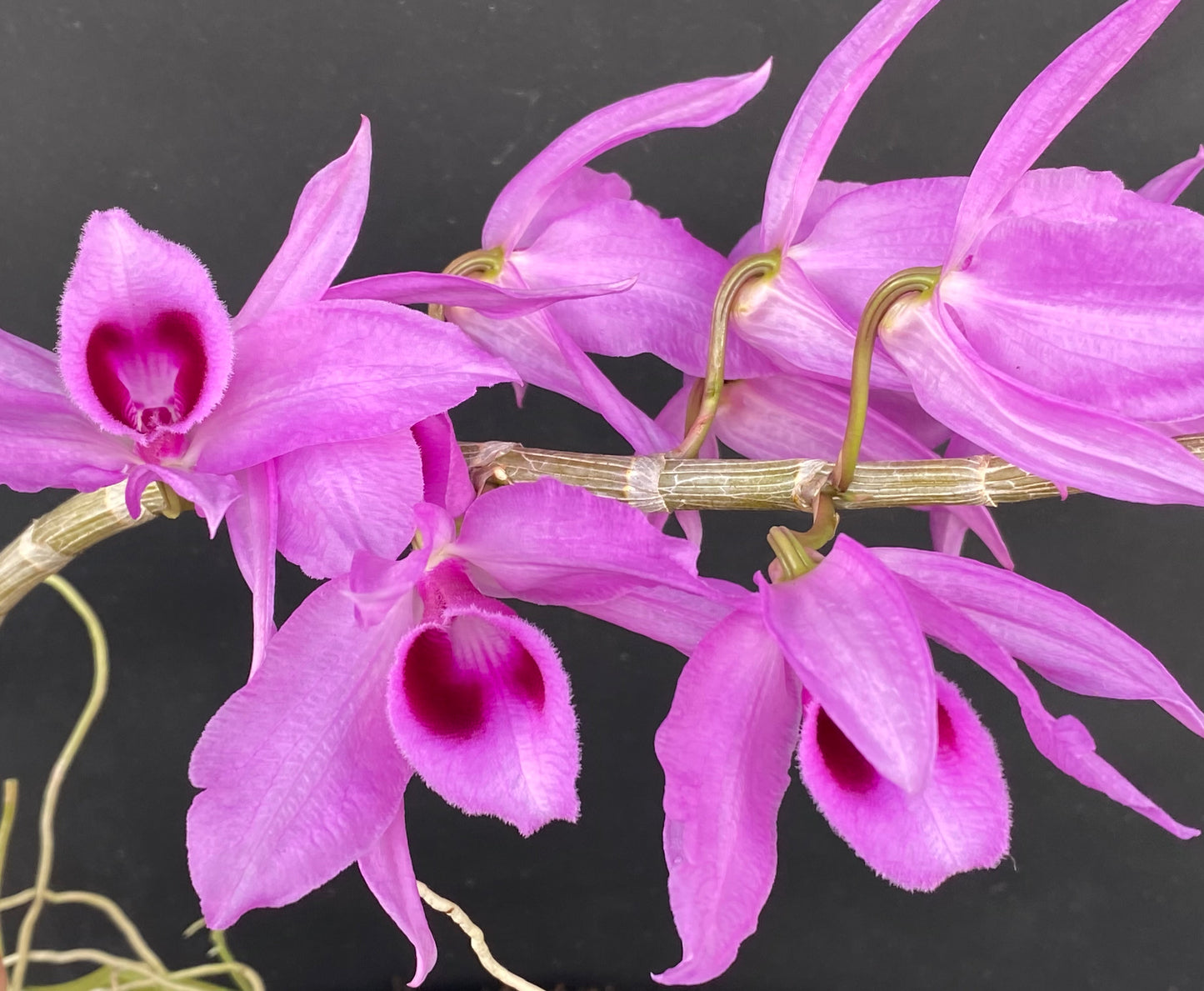
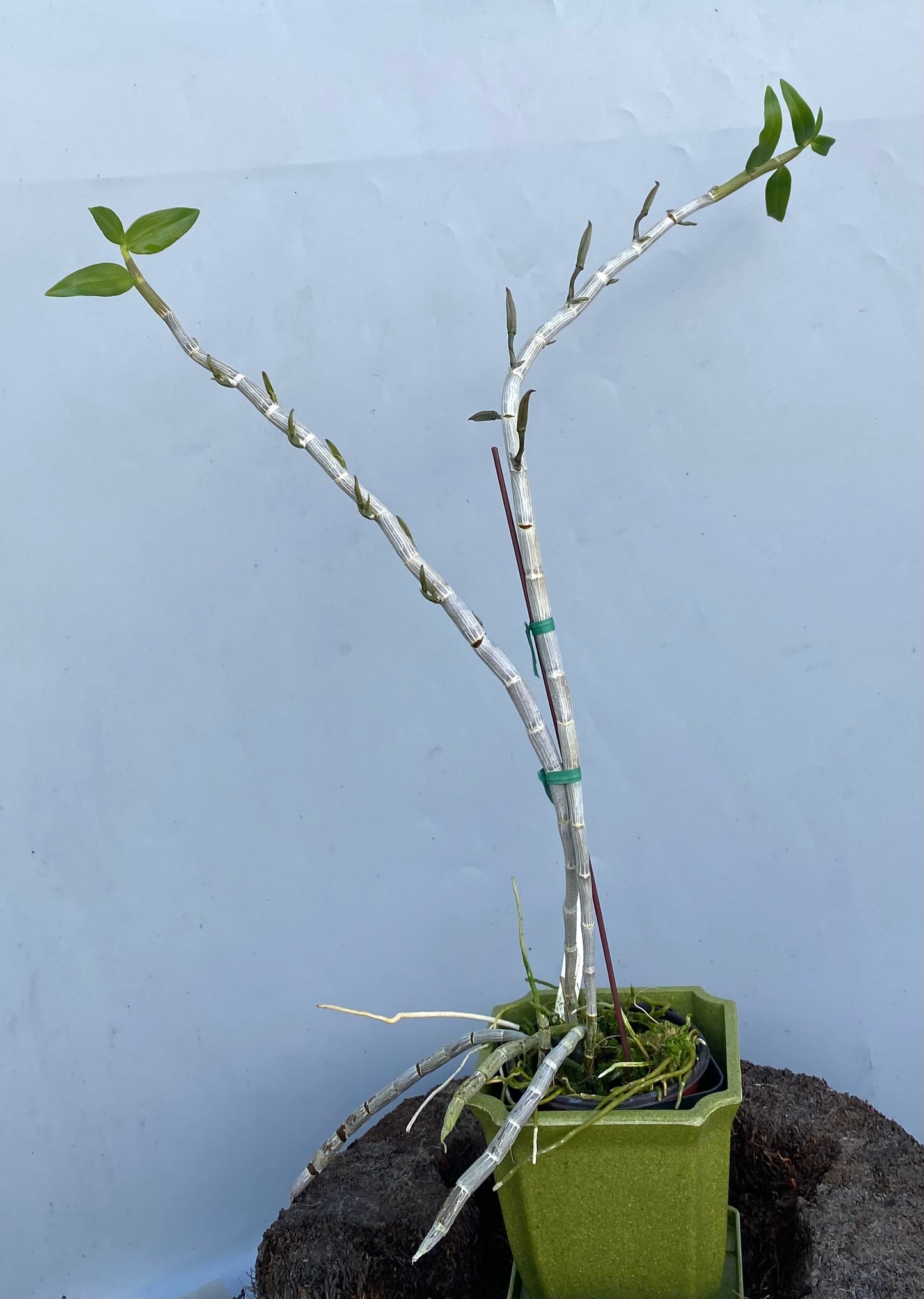
The Dendrobium anosmum Large Flower x Purple is a deciduous epiphyte known for its pendulous canes and remarkably fragrant blossoms. The flowers typically reach 3 to 4 in. across, displaying soft lavender to deep purple petals with a dark, velvety throat. Its foliage consists of light green, oblong leaves that grow along the length of the canes during the active season. As the plant prepares for its bloom cycle, it naturally sheds these leaves, leaving behind silvery, cane-like pseudobulbs that can reach several feet in length.
Quick Start Summary:
Light: Bright filtered light with 50 to 70 percent shade.
Temps: 75 to 90 F in summer; 55 to 65 F in winter.
Water: Heavy watering during growth; strict dry rest in winter.
Humidity: 60 to 80 percent.
Fertilizer: Weekly with high nitrogen during the growing season.
Media: Well-draining bark mix or mounted on wood or cork.
🌺 Orchid Lore & Discovery
Native to the lowland forests of Southeast Asia, Dendrobium anosmum is often referred to as the Honohono orchid in island regions. This particular cross emphasizes the size and color intensity of the wild type, which was first described by western botanists in the mid-19th century. In its natural habitat, it clings to the branches of trees where it experiences a distinct monsoon cycle. This cycle of heavy summer rains followed by a cool, parched winter is the biological trigger that tells the plant to stop growing leaves and start producing its iconic, raspberry-scented flowers.
🌿 How to Grow Dendrobium anosmum 'Large Flower x Purple'
Light: This orchid thrives in bright, indirect light. During the summer months, it prefers a dappled environment where it is protected from the direct midday sun to prevent leaf burn. As the days shorten and the plant enters its deciduous phase, keeping it in a bright location helps ensure the development of flower buds along the mature canes.
Temperature: Maintaining a warm environment between 75 and 90 F during the spring and summer encourages rapid cane development. Once the canes have matured in late autumn, the plant requires a drop in night temperatures to approximately 55 to 60 F. This chill is necessary to initiate the blooming process; without a cool period, the plant may produce vegetative offsets known as keikis instead of flowers.
Watering: During the active growing season, from spring through early autumn, keep the media consistently moist. As the terminal leaf appears at the tip of the cane, gradually reduce watering. Throughout the winter months, water should be withheld almost entirely, providing only enough to keep the canes from shriveling excessively. Resume regular watering only after the flower buds appear or new growth emerges from the base.
Feeding: Apply a balanced fertilizer at half-strength every week while the plant is actively producing new leaves and canes. A high-nitrogen formula is beneficial early in the season. Stop all fertilization by late October to allow the plant to harden off for its winter rest. Over-fertilizing late in the year can inhibit flowering and lead to poor plant health.
Potting and Media: Because of its pendulous growth habit, this orchid is best suited for hanging baskets or mounted directly onto slabs of cork or tree fern. If using a basket, a coarse bark or lava rock medium ensures the roots receive the high level of aeration they require. Repotting should only be done in the spring when new root growth is visible at the base of the plant.
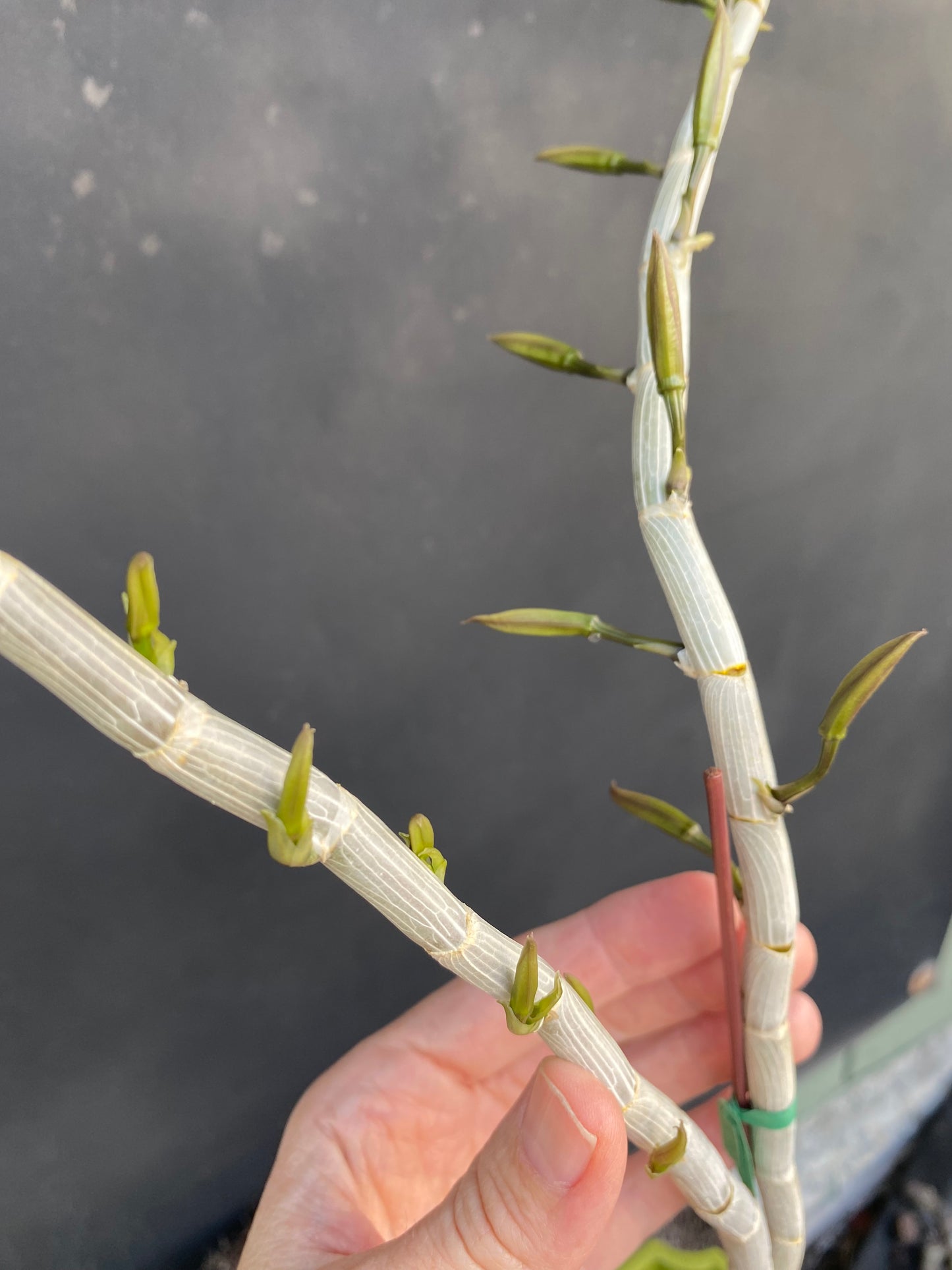
Please note as with all deciduous orchid varieties, its leaves will yellow and fall off when buds are forming and blooming. Eventually, the canes will be bare of leaves when in full bloom.
Share