

Kalapana Orchid Farm
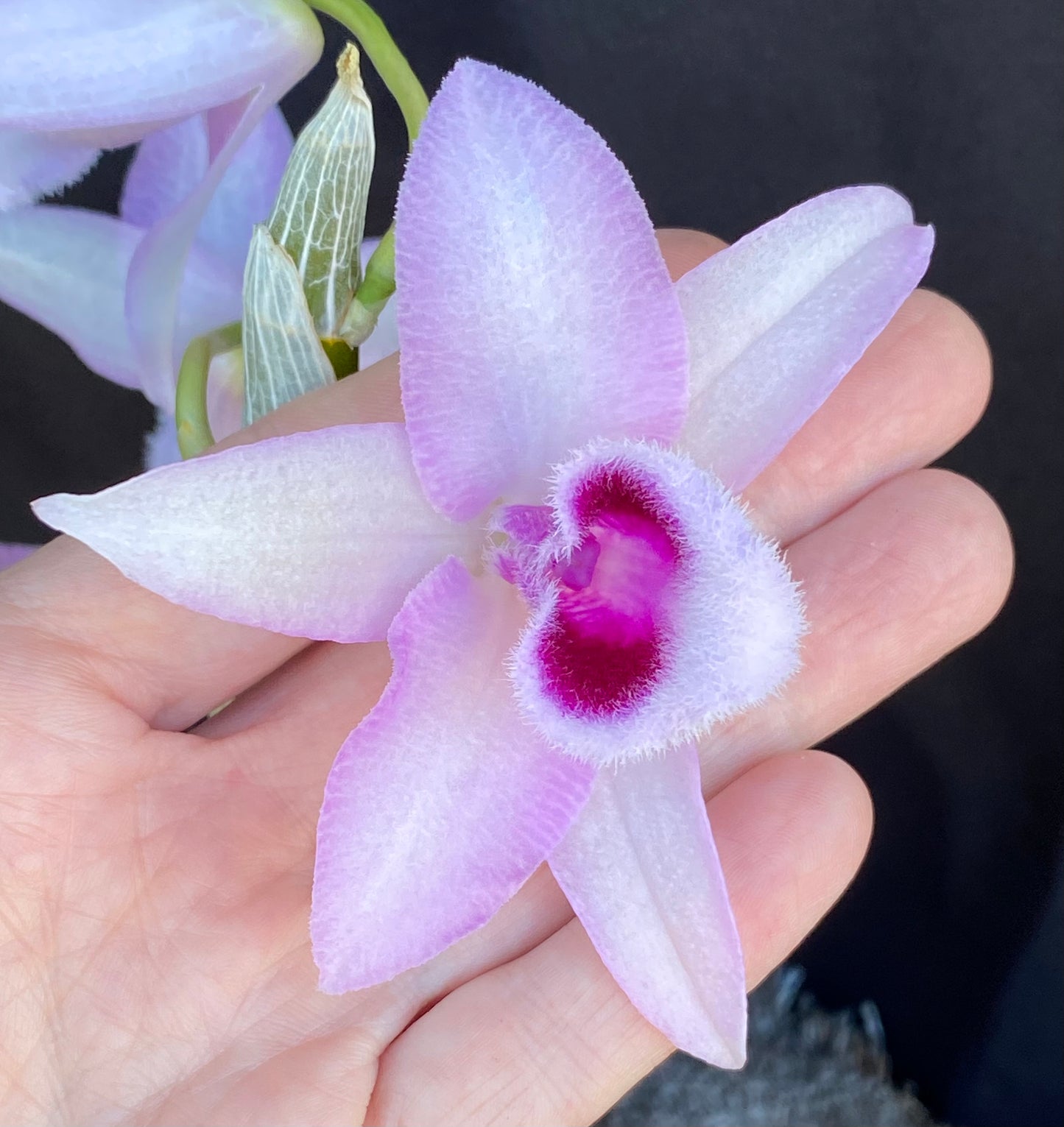
Den. anosmum 'Little Sweet Scent'
Den. anosmum 'Little Sweet Scent'
Couldn't load pickup availability
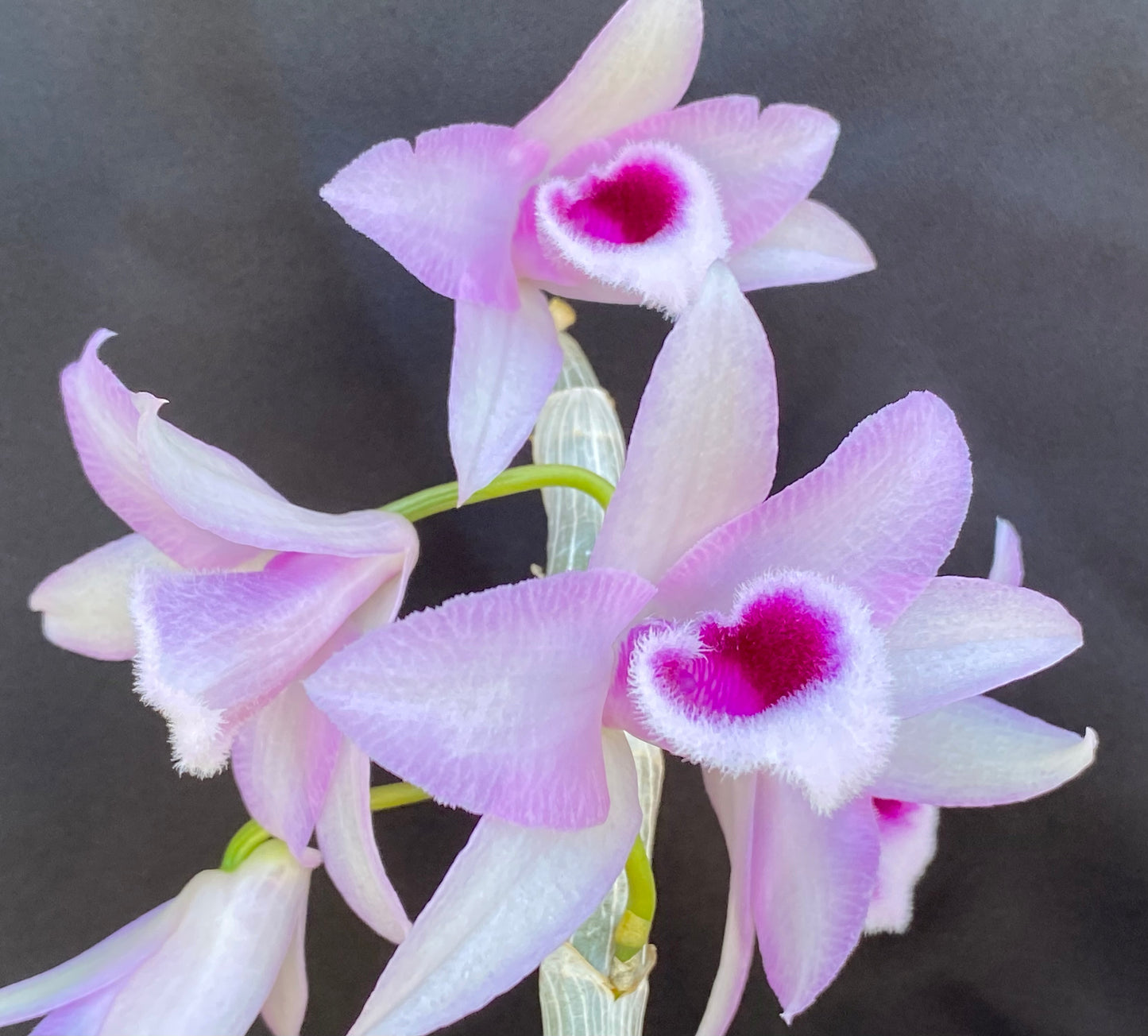
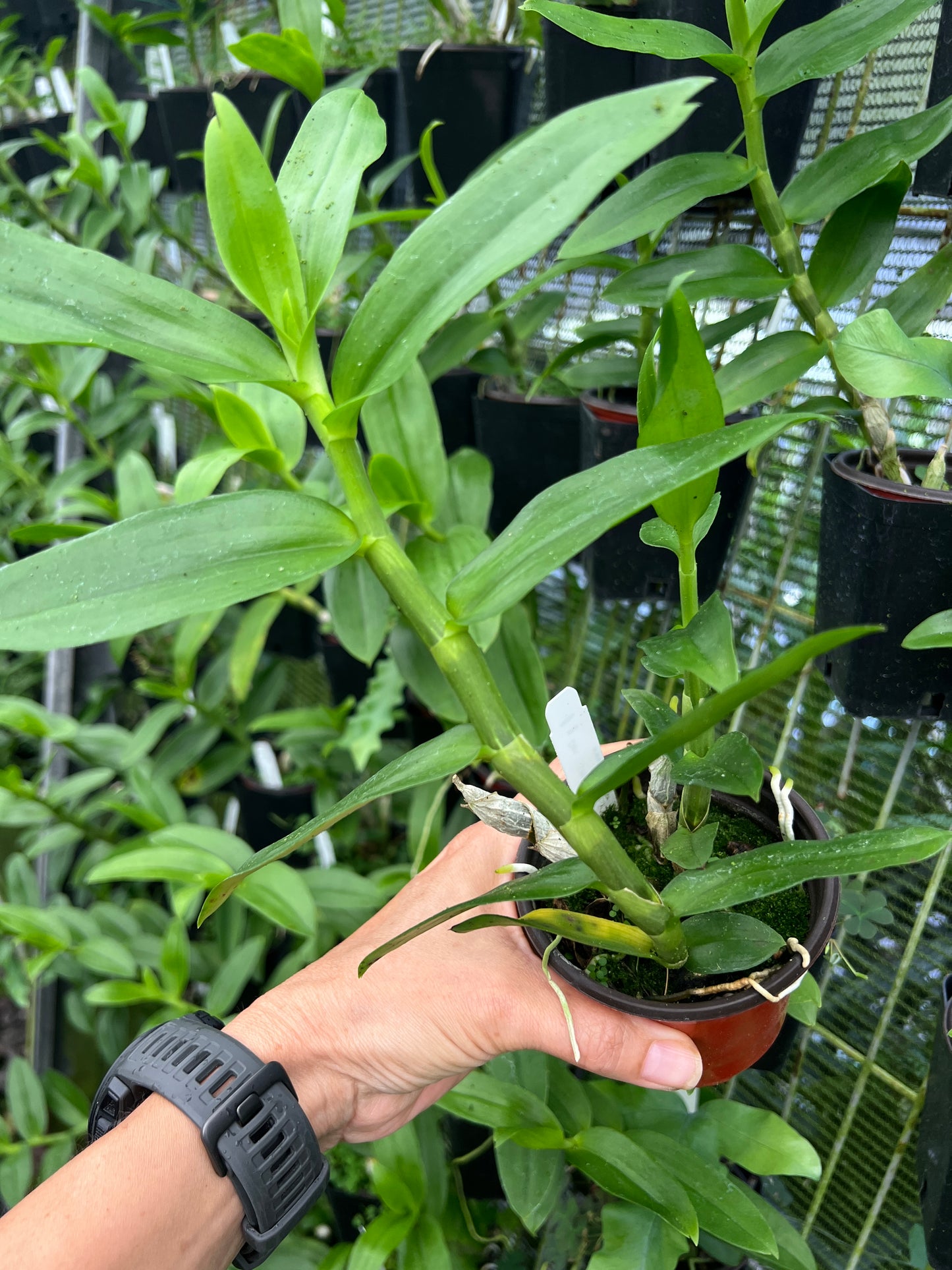
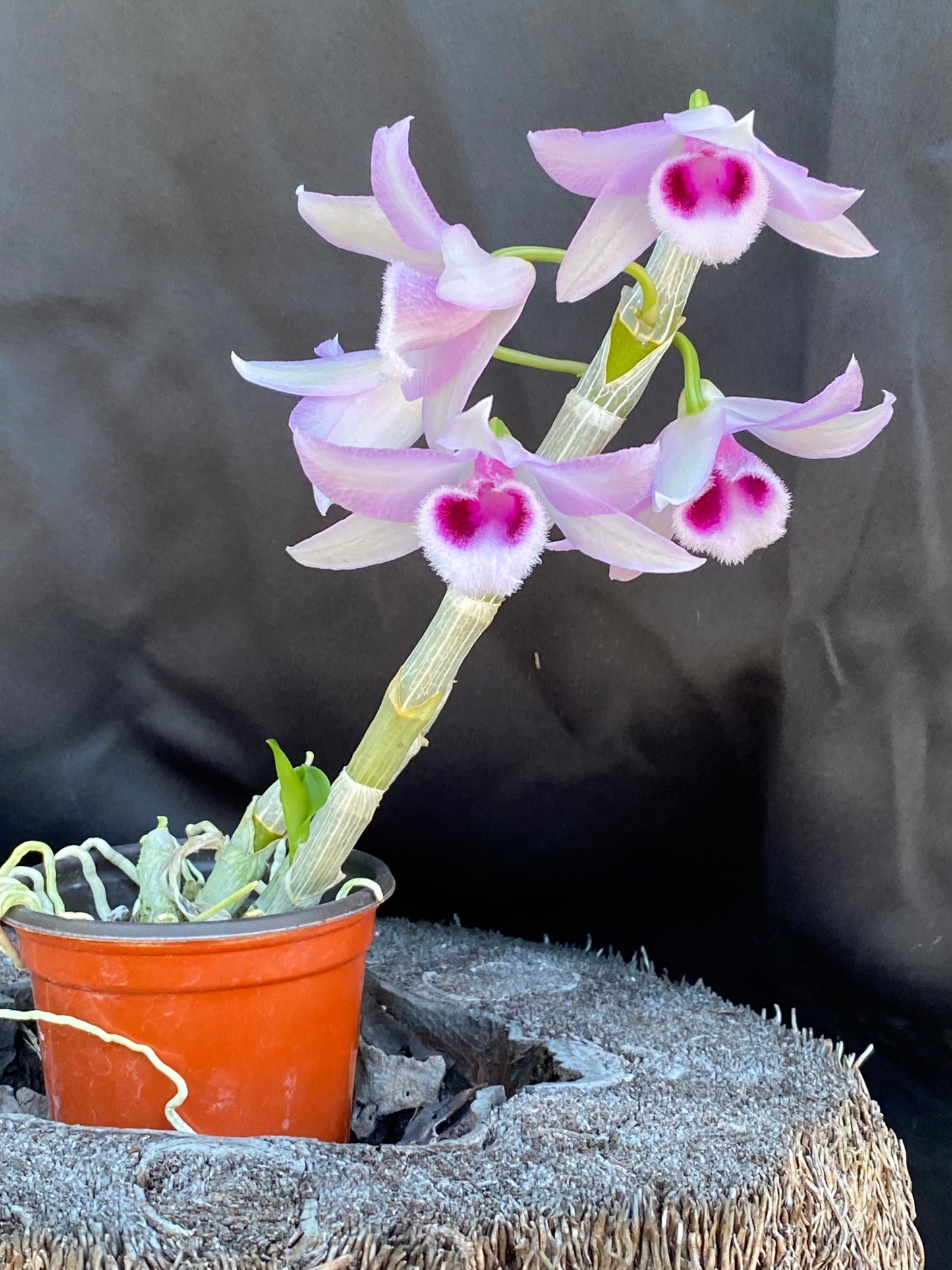
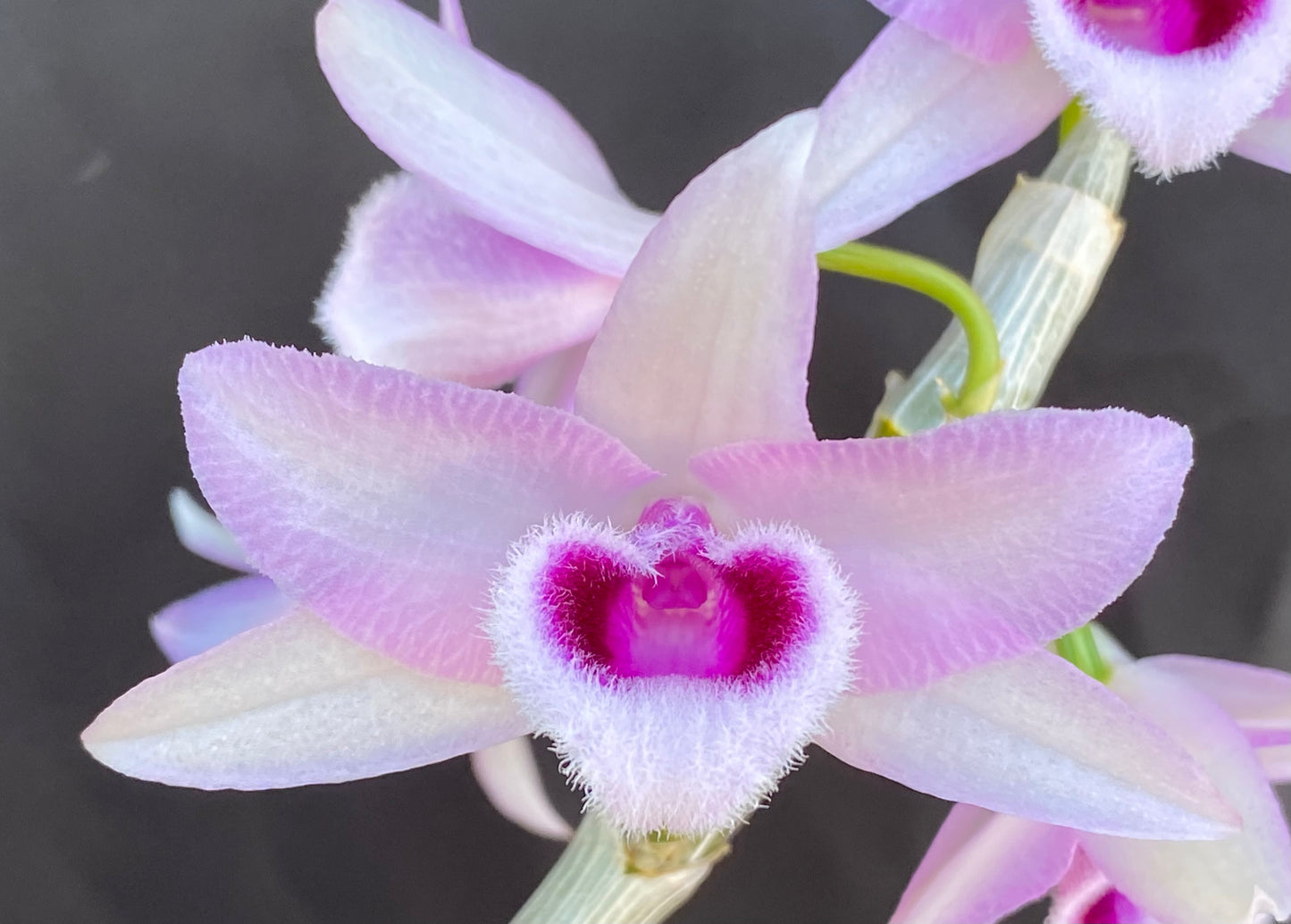
The Dendrobium anosmum Little Sweet Scent is a popular primary hybrid derived from Dendrobium anosmum and Dendrobium parishii. This compact epiphyte produces shorter, stouter canes than the standard species, making it an excellent choice for growers with limited space. The flowers are typically 2 to 3 in. across and possess a brilliant rose-purple hue with a dark, velvety lip. Its foliage consists of soft green leaves that grow in a distichous pattern along the canes, eventually falling away to reveal the flower buds in early spring.
Quick Start Summary:
Light: Bright filtered light, approximately 50 percent shade.
Temps: 70 to 90 F in summer; 55 to 65 F in winter.
Water: Copious water during growth; dry rest starting in late fall.
Humidity: 60 to 75 percent.
Fertilizer: Balanced orchid fertilizer weekly during active growth.
Media: Sphagnum moss in baskets or mounted on cork slabs.
🌺 Orchid Lore & Discovery
This hybrid brings together two of the most fragrant species in the Dendrobium genus. By crossing Dendrobium anosmum with Dendrobium parishii, breeders created a plant that retains the intense, raspberry-like fragrance of its parents but in a more manageable size. Historically, these parent species were collected from the canopy of deciduous forests in Southeast Asia, where they adapted to survive long periods without rain. This heritage is reflected in the plant's unique life cycle, where it transitions from a lush, leafy phase to a bare, dormant state before bursting into a fragrant display of blossoms.
🌿 How to Grow Dendrobium anosmum 'Little Sweet Scent'
Light: To ensure a heavy bloom, provide the plant with plenty of bright, indirect light. In the spring and summer, a location that mimics the dappled sunlight of a forest canopy is best. During the winter rest period, high light is crucial to provide the energy needed for the canes to produce flowers rather than vegetative keikis.
Temperature: This orchid enjoys warm to hot temperatures during its growing season, ideally staying between 75 and 90 F. To trigger the flowering process, the plant requires a distinct cooling period in the winter. Nighttime temperatures should drop into the 55 to 60 F range for several weeks. Once the flower buds begin to swell, temperatures can be gradually increased back to a moderate range.
Watering: During the active growth phase when new canes are elongating, the plant should be watered frequently to keep the roots moist. As the weather cools in late autumn and the leaves begin to turn yellow and drop, watering must be significantly reduced. For the duration of the winter, only mist the canes occasionally to prevent them from shriveling. Full watering should only resume after the flowers have faded and new green shoots appear at the base.
Feeding: Apply a high-nitrogen or balanced fertilizer every week throughout the summer to help the plant build strong, thick canes. Stop all fertilization once the plant begins its winter rest. Providing nutrients during the dormancy period can interfere with the blooming cycle and may cause the plant to skip flowering in favor of leaf growth.
Potting and Media: Due to its semi-pendulous nature, this hybrid is most frequently grown in hanging wooden baskets or mounted on cork bark. If grown in a pot, use a very well-draining medium such as fine bark or a mix of moss and perlite. Because this plant appreciates high humidity around its roots during the growing season, sphagnum moss is often used to help retain moisture between waterings in breezy environments.
Please note as with all deciduous orchid varieties, its leaves will yellow and fall off when buds are forming and blooming. Eventually, the canes will be bare of leaves when in full bloom.
Box with 2: Shipping will be refund after checkout
Share