

Kalapana Orchid Farm
Den. Microchip x Den. forbesii
Den. Microchip x Den. forbesii
Couldn't load pickup availability
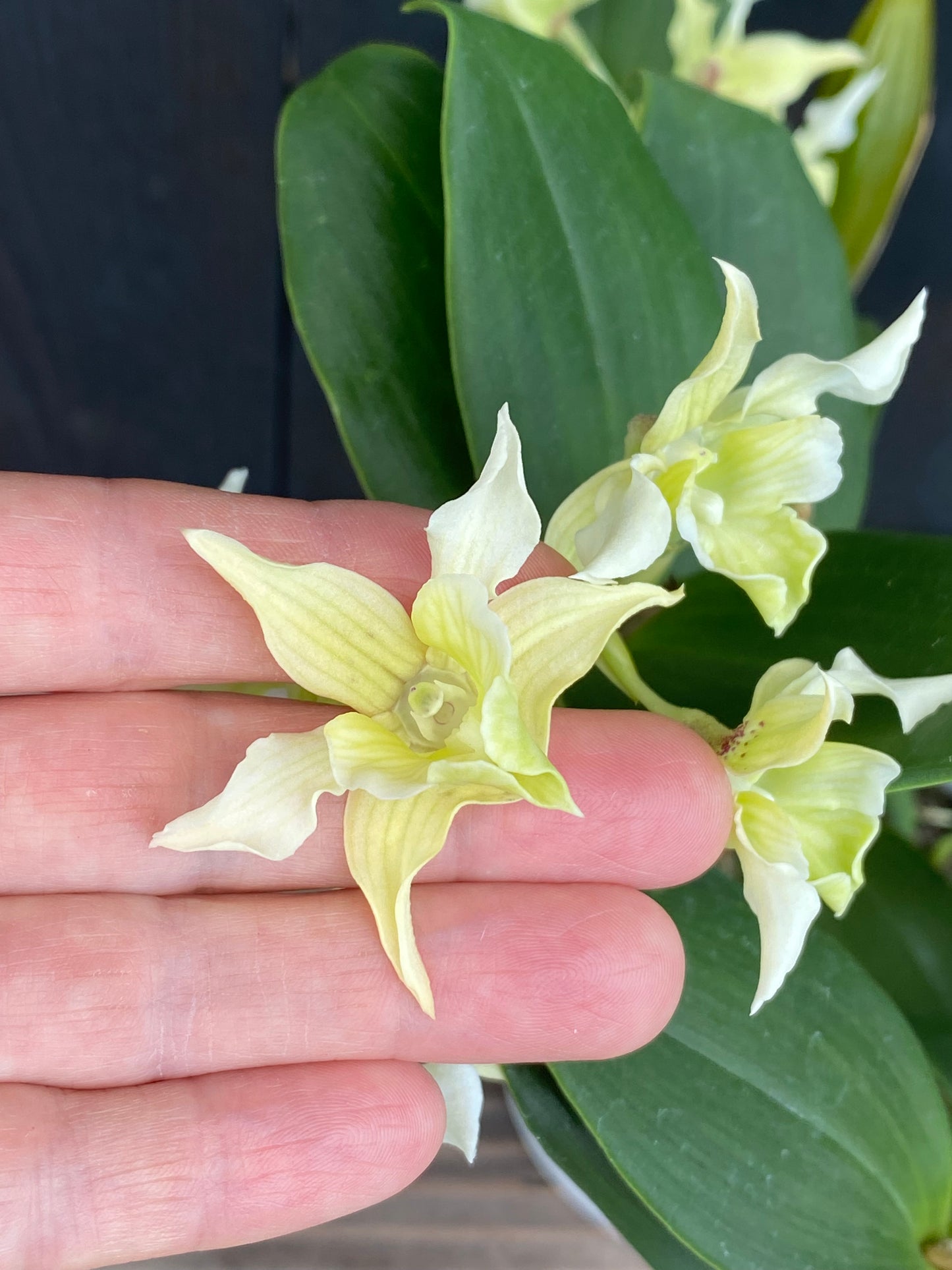
This superb Dendrobium hybrid, Den. Micro Chip x Den. forbesii, is a semi-compact hybrid latouria-type which produces numerous flower spikes from the tops of its slender, cane-like pseudobulbs, often resulting in a cascade of blooms. The flowers are typically a soft yellow to cream, frequently adorned with subtle pink or lavender flaring near the tips of the petals and sepals. The lip is often marked with fine texture and contrasting maroon or deep purple veining. The plant itself is a tidy grower, developing multiple canes that mature quickly to a height of about 9 to 13 in. The foliage is generally deep green and persistent, lending a lush appearance to the plant throughout the year.
Quick Start Summary:
Light: Medium to high light; avoid direct midday sun.
Temps: Intermediate to warm, 60 F to 80 F is generally suitable year-round.
Water: Regular and consistent watering while actively growing; slight reduction in winter.
Humidity: Moderate to high, 50 percent to 70 percent is ideal.
Fertilizer: Balanced fertilizer applied regularly during the active growth period.
Media: Fine-grade bark mix or sphagnum moss; good drainage is essential.
🌺 Orchid Lore & Discovery
This hybrid brings together the best characteristics of its parent species within the Dendrobium genus. Dendrobium Micro Chip is a successful hybrid known for its floriferous nature. Dendrobium forbesii is a charming species native to the island of New Guinea, typically found in high-altitude, humid forests. It contributes a compact growth habit and beautifully colored flowers. The resulting cross, Den. Micro Chip x Den. forbesii (recently registered as Dendrobium Micro Forbes), is a robust, reliable bloomer, valued for its ability to produce a large number of colorful flowers on a sturdy plant. This hybrid is a member of the Latouria section of Dendrobium, known for its long-lasting, unique flowers and ease of culture.
🌿 How to Grow Den. Micro Chip x Den. forbesii
Light: Den. Micro Chip x Den. forbesii thrives in medium to high light levels. It does well with the light that suits Phalaenopsis but can tolerate brighter conditions, similar to Cattleya. An east or lightly shaded south-facing exposure is often ideal. Aim for 1500 to 3000 foot-candles. Insufficient light will lead to dark green leaves and a lack of blooms, while harsh, direct afternoon sun can cause leaf scorching.
Temps: This orchid prefers intermediate to warm temperatures. During the active growing season, maintain daytime temperatures between 70 F and 80 F, with nighttime temperatures around 60 F to 65 F. A slight drop in nighttime temperatures (5 F to 10 F) is beneficial for initiating blooming, but this orchid does not require a severe winter rest or cooling period.
Water: Water regularly when the plant is actively growing, ensuring the roots dry out slightly between waterings. Typically, water every four to seven days depending on the media and environment. The canes are less fleshy than deciduous Dendrobium types, so they require consistent moisture, even in winter. Reduce the frequency of watering slightly during the cooler, shorter days of winter, but do not allow the plant to stay dry for extended periods.
Humidity: Provide moderate to high humidity, ideally between 50 percent and 70 percent. This helps keep the thin canes from shriveling and promotes healthy, rapid growth. As always, adequate air movement is crucial to prevent the growth of mold or fungus in high-humidity environments. Using a humidity tray or grouping plants can help maintain stable levels.
Fertilizer: Fertilize regularly throughout the year, especially during periods of active growth (spring through fall). Use a balanced orchid fertilizer (e.g., 20-20-20) diluted to half or quarter strength, applied at every watering. A high-phosphorus booster can be applied as the new canes mature to encourage flower production. Flush the pot with plain water once a month to prevent salt buildup in the media.
Media: A coarse, well-draining media that retains some moisture is ideal. A mix of fine-grade fir bark, charcoal, and perlite, or pure sphagnum moss, works well. Due to its finer root system, it appreciates a media that retains moisture but still allows for rapid drainage. Repotting should be done when the media begins to break down, usually every one to two years, just as new root growth is emerging from the base of a new cane.
Grown in 4" pots.
Share