

Kalapana Orchid Farm
Den. Pixie Charm
Den. Pixie Charm
Couldn't load pickup availability
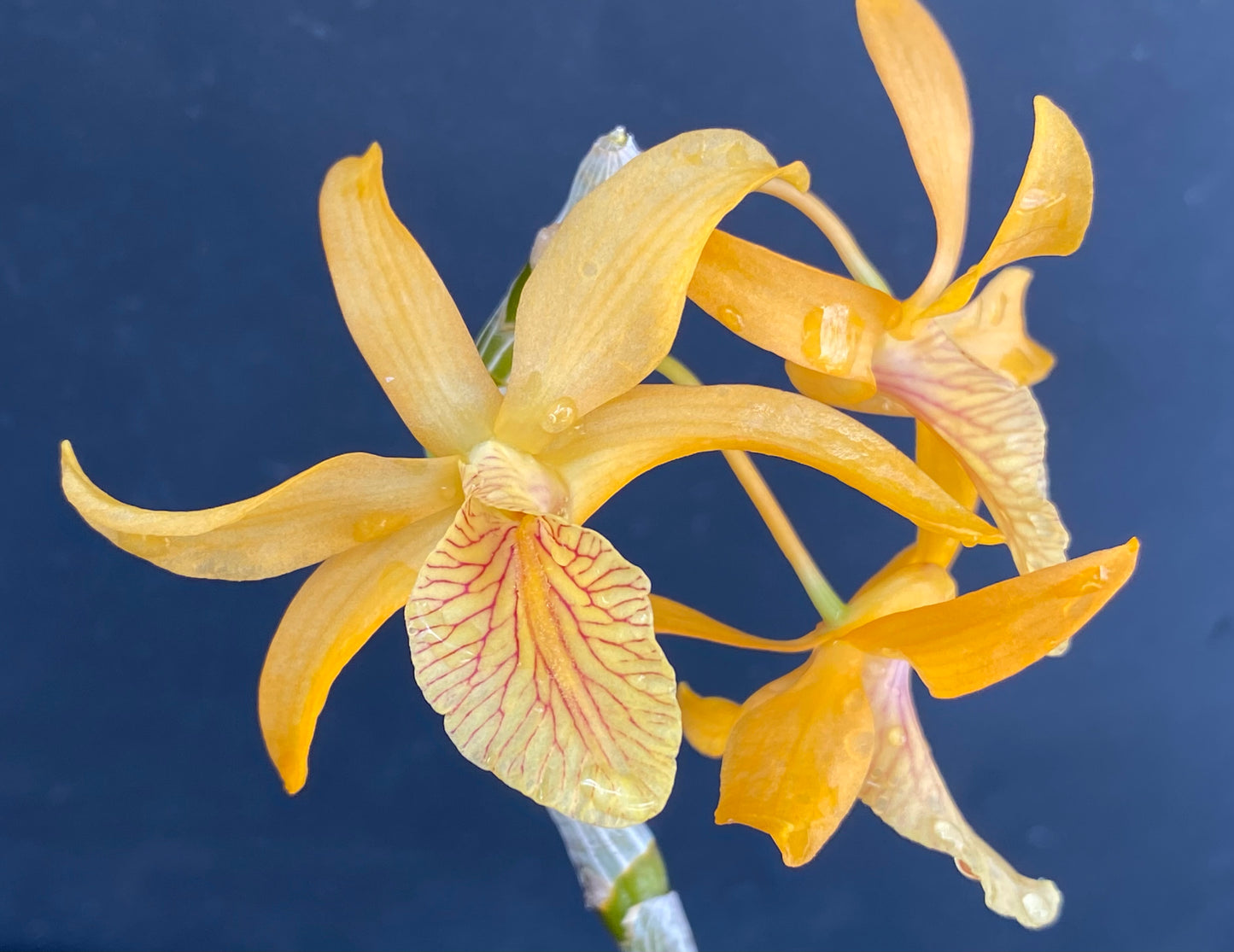
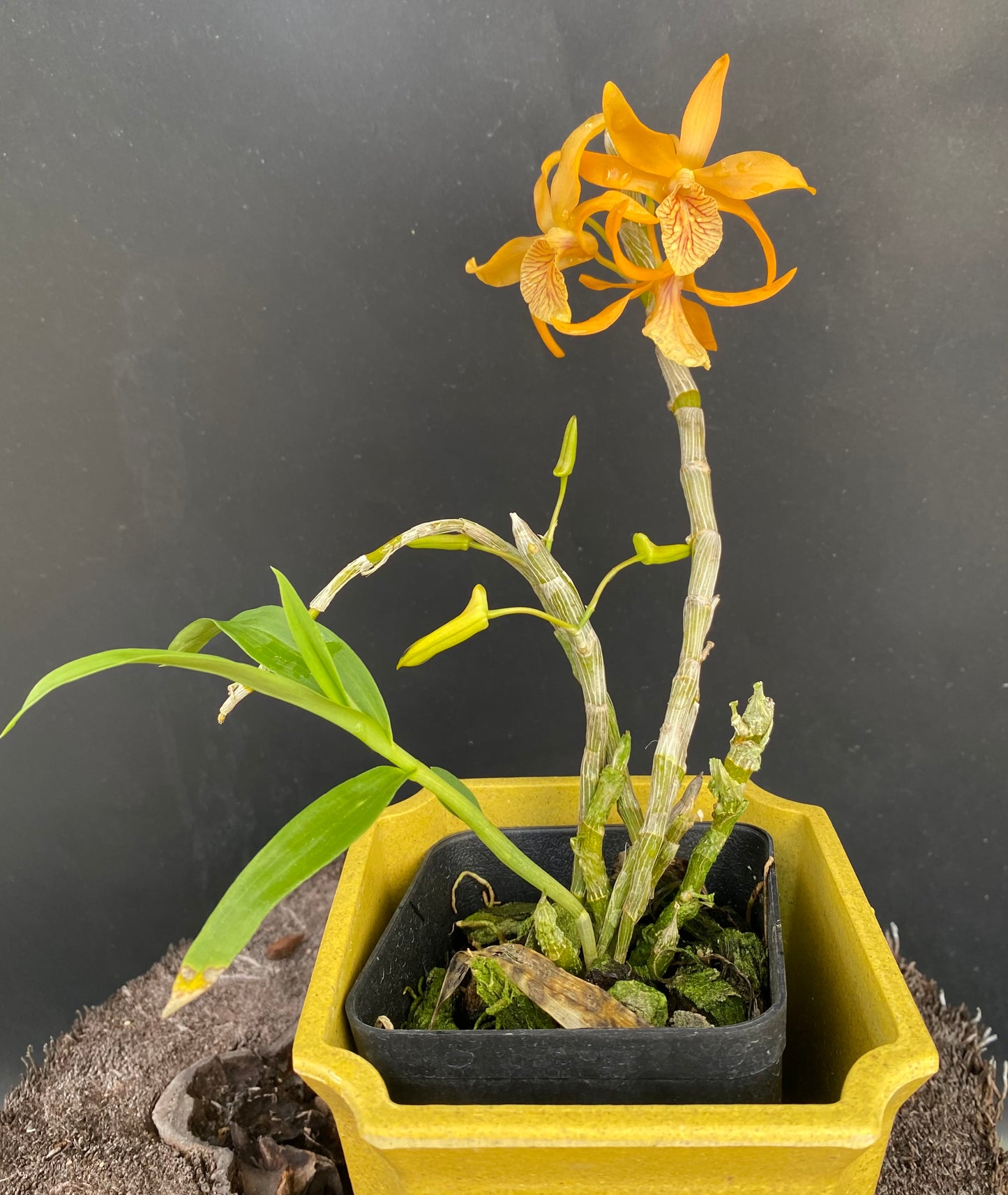
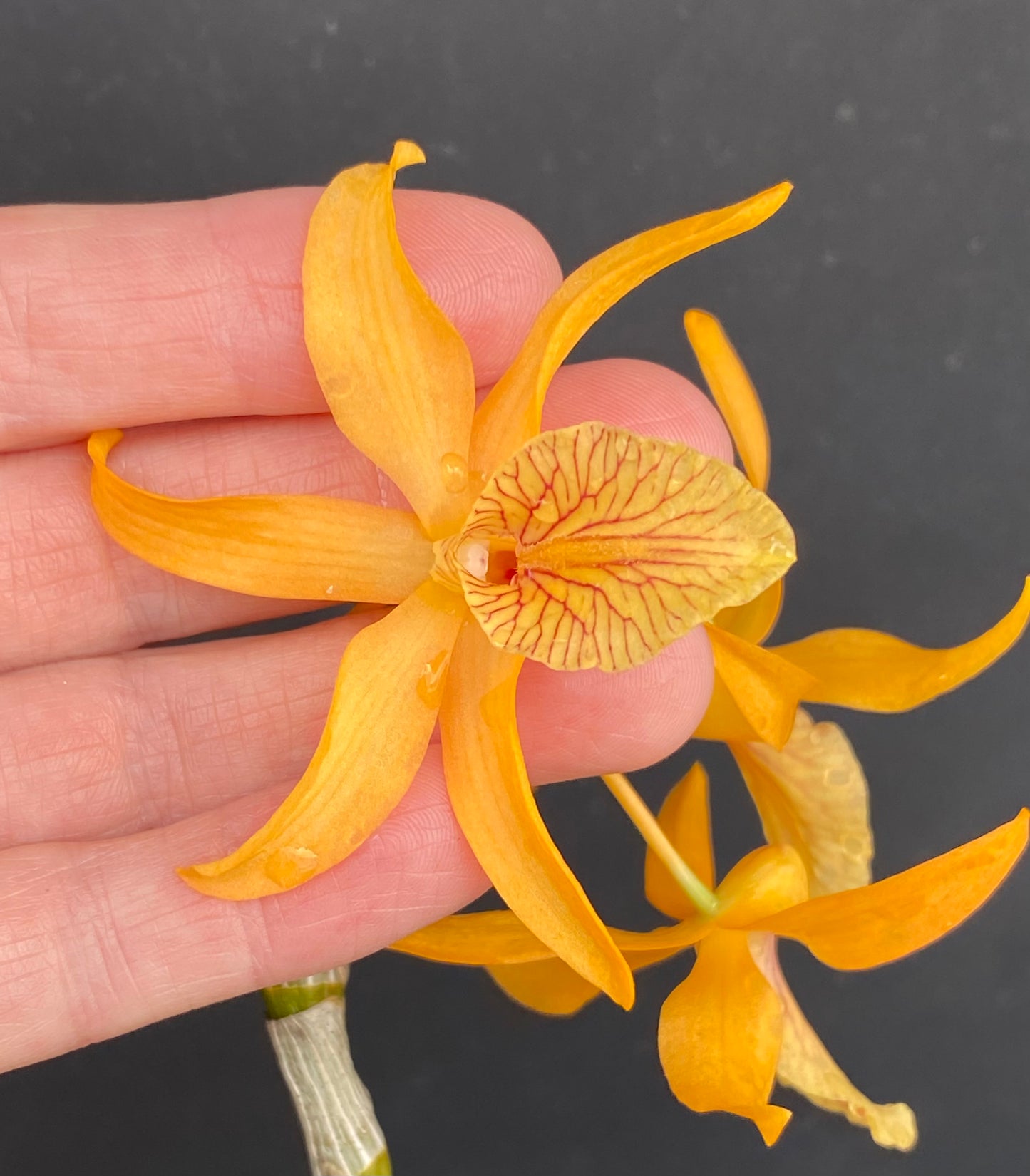
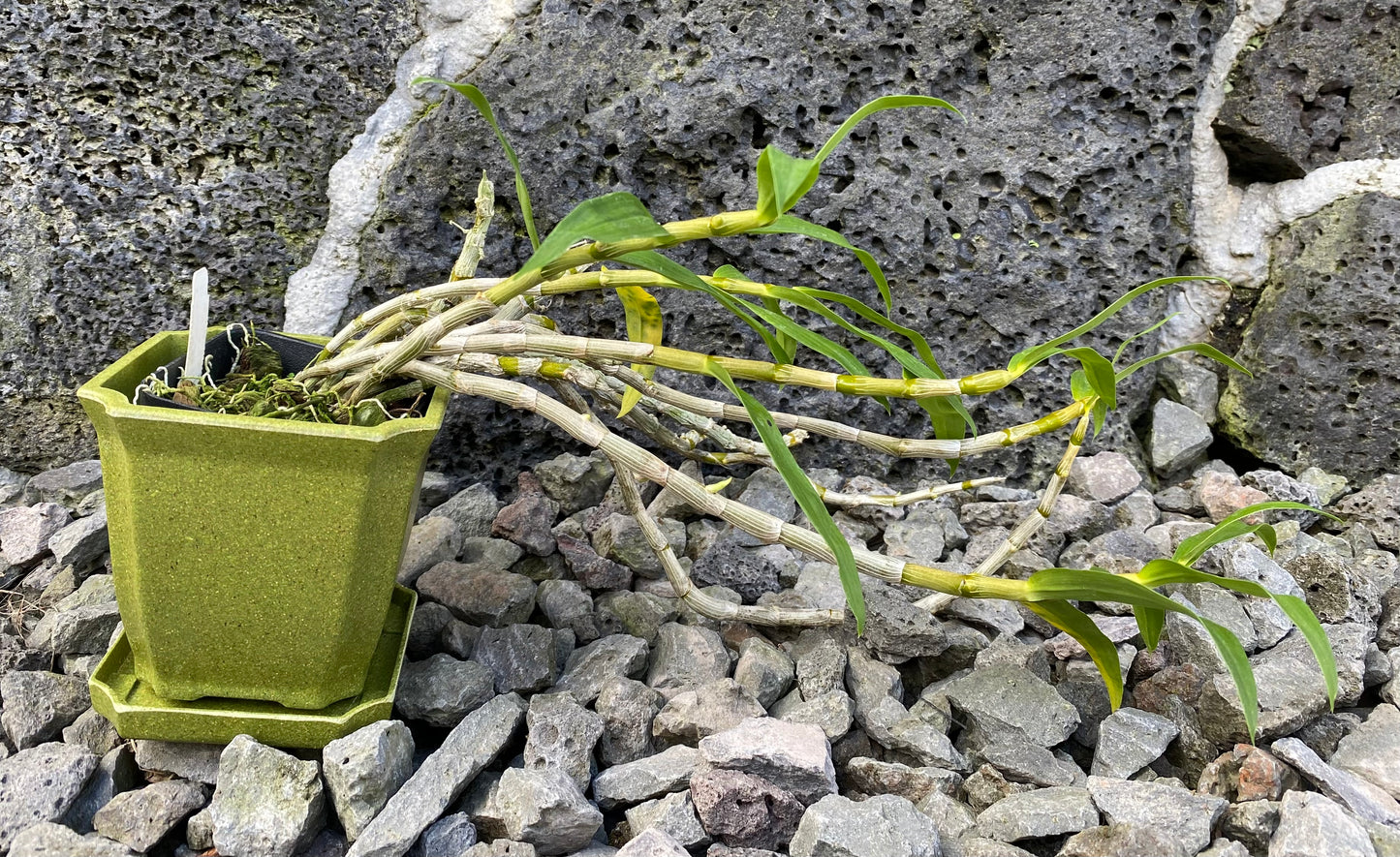
The orchid Dendrobium Pixie Charm is a vibrant deciduous hybrid known for producing a profusion of bright orange, star-shaped flowers that emit a sweet fragrance reminiscent of apricots. These blossoms feature slightly recurved petals and sepals with a more intense orange tone on the lip, emerging in dense clusters from the nodes of upright or pendulous canes.
Because the plant is deciduous, the green leaves naturally yellow and drop as the plant prepares to bloom, often leaving the canes bare to showcase the colorful and delightfully scented floral display during late winter and early spring.
Quick Start Summary
Light: Bright filtered light
Temps: 60 F to 85 F
Water: Heavy in summer and sparse in winter
Humidity: 50 to 60 percent
Fertilizer: Every two weeks during active growth
Media: Fine bark or well-draining orchid mix
🌺 Orchid Lore & Discovery
Dendrobium Pixie Charm is a member of the deciduous group of Dendrobium hybrids, which are largely influenced by species native to the seasonal forests of Southeast Asia. These plants have evolved to survive in environments with distinct wet and dry seasons. During the monsoon season, they grow rapidly and store energy in their thickened canes. As the dry, cooler season approaches, the plants shed their leaves to conserve moisture and prepare for their spectacular flowering period. This specific hybrid was bred to emphasize the brilliant orange hues and compact growth habit, making it a favorite for those who enjoy the unique cycle of deciduous orchids.
🌿 How to Grow Dendrobium Pixie Charm
Light: This orchid requires bright filtered light to grow and bloom successfully. During the spring and summer growing season, plenty of light is necessary to build up the energy needed for flowers. In the autumn, providing high light levels while reducing fertilizer is essential to trigger the initiation of flower buds. If the plant is grown in too much shade, it may produce lush green growth but fail to flower in the winter.
Temps: These plants enjoy warm daytime temperatures between 75 F and 85 F during the growing season. However, they require a distinct drop in nighttime temperatures during the late autumn and early winter to set buds. Night temperatures in the range of 50 F to 60 F are ideal during this period. Once the buds have formed, the plant should be kept in a stable environment to prevent bud blast.
Water: Watering should be frequent and consistent from spring through summer when the plant is actively producing new canes and leaves. As the weather cools in the fall and the leaves begin to yellow, water should be reduced significantly. During the winter dormancy, water only enough to prevent the canes from shriveling excessively. Once the flowers fade and new growth appears at the base, regular watering can resume.
Humidity: Moderate humidity is sufficient for this hybrid, generally staying between 50 and 60 percent. Good air movement is vital, especially when humidity is high, to prevent spotting on the leaves or flowers. If the environment is too dry during the winter, a light misting of the canes can help, but avoid keeping the media soggy during the dormant phase.
Fertilizer: Apply a balanced orchid fertilizer every two weeks during the active growing season in spring and summer. This supports the development of strong, healthy canes. It is critical to stop or drastically reduce fertilization in the autumn. Excessive nitrogen during the fall can cause the plant to produce vegetative offsets, known as keikis, instead of flower buds at the nodes.
Media: A well-draining medium such as fine-grade fir bark or a mix of bark, perlite, and charcoal is recommended. Because this hybrid has a pendulous growth habit, it is also very well-suited for growing in hanging baskets or mounted on slabs of cork or tree fern. If grown in a pot, ensure it is small enough to allow the media to dry out relatively quickly, as the roots do not like to stay saturated for long periods.
Please note as with all deciduous orchid varieties, its leaves will yellow and fall off when buds are forming and blooming. Eventually, the canes will be bare of leaves when in full bloom.
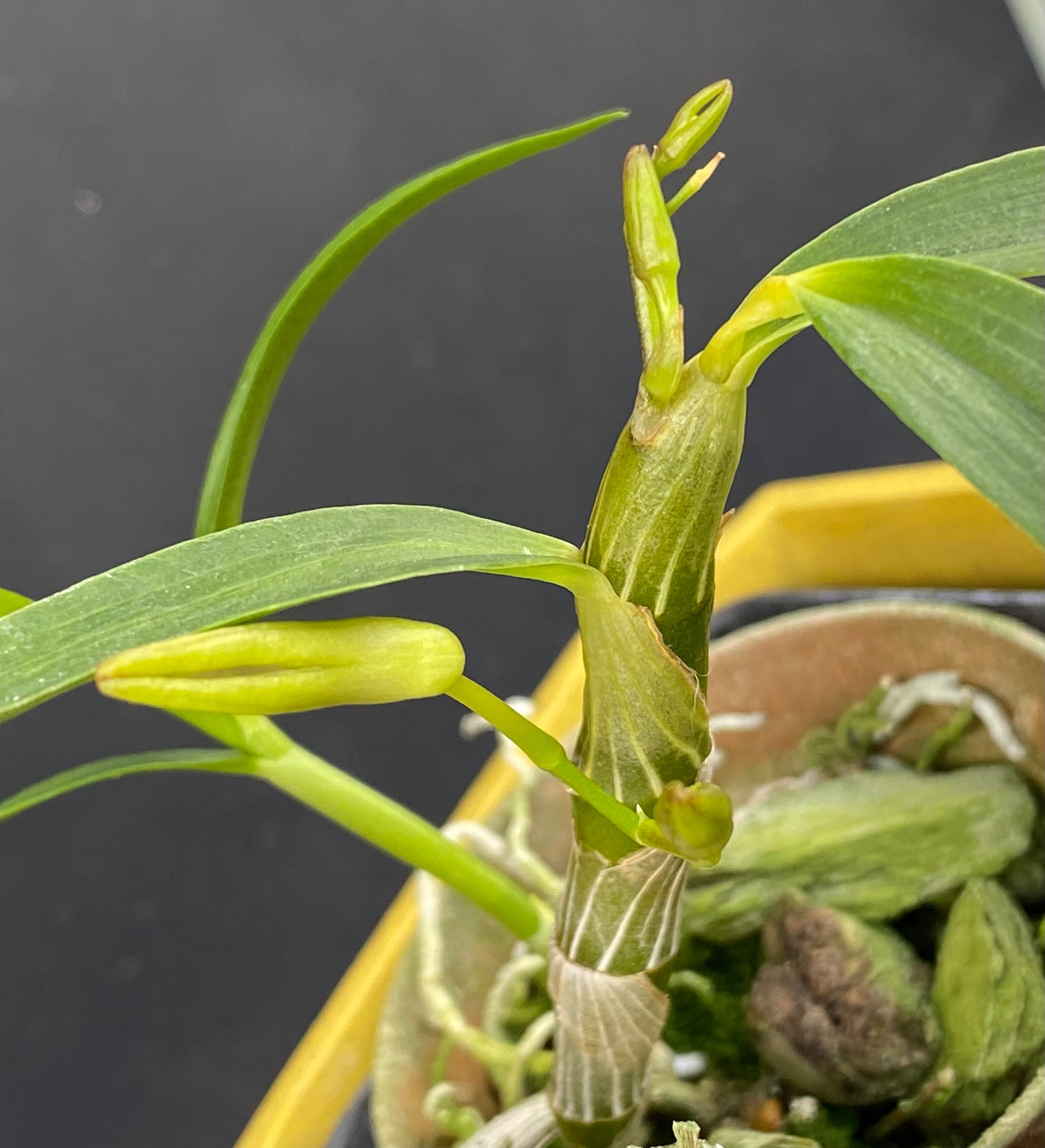
Currently showing the very first signs of buds. Plants are 4-5 weeks away from flowering.
Share