

Kalapana Orchid Farm
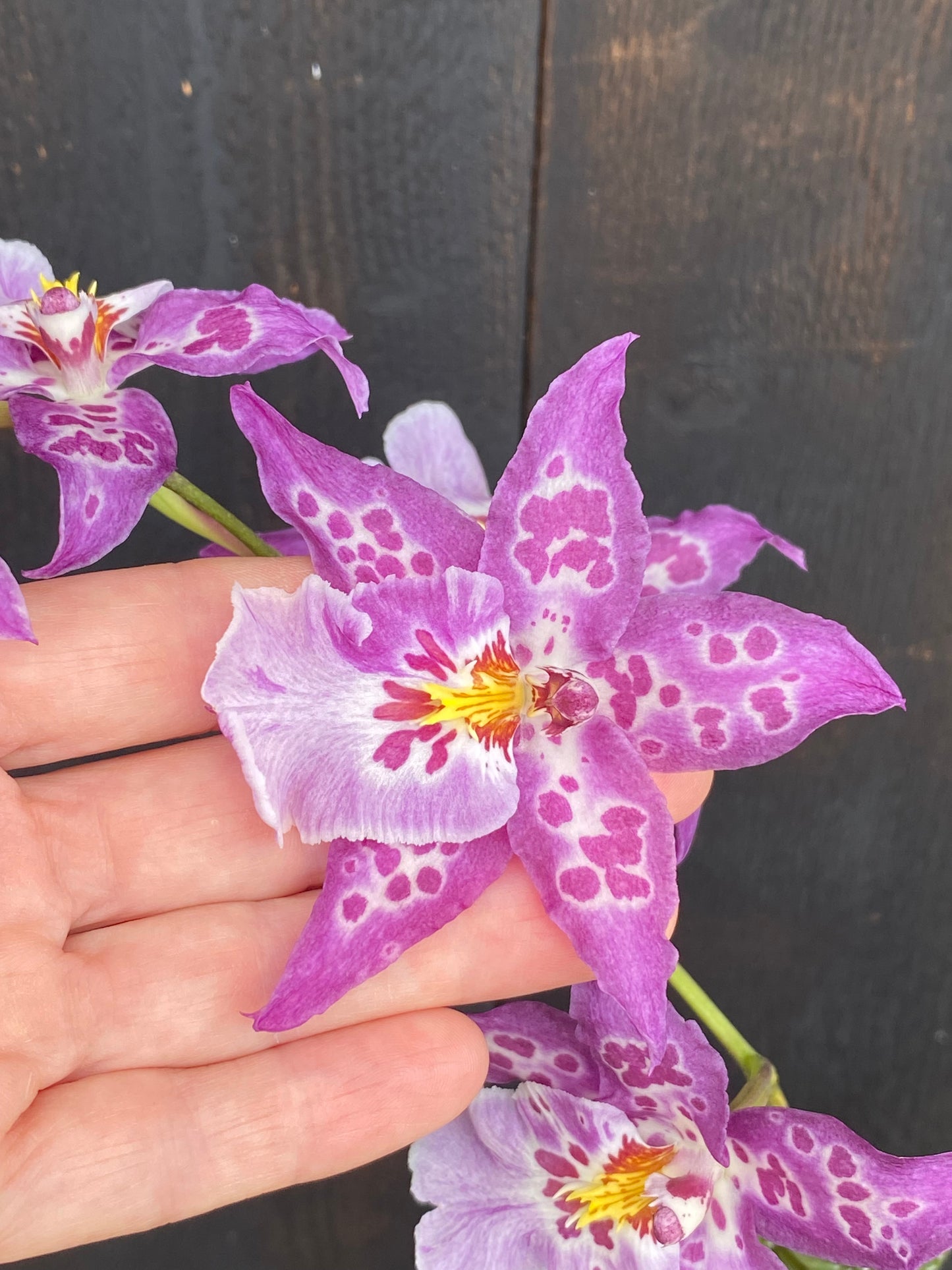
Dgmra. Shibumi 'Purple Rain'
Dgmra. Shibumi 'Purple Rain'
Couldn't load pickup availability
This beautiful intergeneric hybrid, Wilhelmara Shibumi 'Purple Rain', is a dependable and easy-to-grow orchid from the Oncidium alliance. It produces tall, arching spikes carrying star-shaped flowers that are typically a deep, rich violet-purple, often with subtle white or soft lavender patterning near the center. The blooms are striking in their coloration and offer a pleasing display, frequently blooming multiple times a year, particularly in the fall, winter, and spring. The plant forms medium-sized pseudobulbs that are generally round, topped with slender, persistent, medium-green foliage. This is a vigorous hybrid that reliably puts on a show when grown correctly.
Quick Start Summary:
Light: Low to medium light; bright, diffused light is ideal.
Temps: Intermediate to warm, 60 F to 80 F is suitable year-round.
Water: Consistent moisture during growth; allow potting mix to approach dryness between waterings.
Humidity: Moderate to high, 50 percent to 70 percent is ideal.
Fertilizer: Balanced fertilizer applied regularly during the active growth period.
Media: Fine-grade bark mix, sphagnum moss, or a mix of both for moisture retention.
🌺 Orchid Lore & Discovery
The hybrid Wilhelmara Shibumi was registered in 2010 by J.W. McCully, combining the parents Rhynchonia Honolulu Rain and Bratonia Charles M. Fitch. The genus Wilhelmara is a complex combination of several genera in the Oncidium alliance, specifically Rhynchostele, Miltonia, and Brassia. The parentage includes species like Miltonia spectabilis (contributing to the shape and patterning) and Brassia verrucosa (contributing to the large, spidery form of the flower). This genetic mix results in a vigorous plant with flowers reminiscent of the classic Beallara hybrids but with the deep, saturated purple coloration that gives the 'Purple Rain' cultivar its memorable name.
🌿 How to Grow Whm. Shibumi 'Purple Rain'
Light: Whm. Shibumi 'Purple Rain' prefers low to medium light levels, doing best in bright, diffused light that avoids harsh, direct sun. An east-facing window or a shaded south-facing window works well. Too much direct sun can yellow or spot the leaves, while too little light will inhibit blooming. Aim for light levels between 1000 and 2500 foot-candles.
Temps: This orchid is an intermediate to warm grower. During the day, temperatures between 70 F and 80 F are perfect for active growth. Nighttime temperatures should ideally drop to 60 F to 65 F. Consistent temperatures within this range promote good health and encourage the multiple blooming periods this hybrid is known for.
Water: This orchid requires consistent moisture, similar to many Oncidium-type hybrids. Water just as the potting mix approaches dryness, but do not allow the roots to stay dry for long periods, especially when the plant is actively growing a new pseudobulb. Shriveled pseudobulbs are a key indicator that the plant needs more frequent watering. The general rule is to water thoroughly and allow for good drainage.
Humidity: Maintain moderate to high humidity levels, ideally 50 percent to 70 percent. Higher humidity is beneficial, especially during the warm summer months, to prevent the leaves and pseudobulbs from shriveling. Ensure there is good air circulation, particularly in humid conditions, to prevent leaf spotting or fungal issues.
Fertilizer: Fertilize regularly while the plant is in active growth and during its multiple bloom periods. Use a balanced fertilizer (e.g., 20-20-20) diluted to half or quarter strength, applied with every watering. Reduce the frequency of fertilizer application slightly during the cooler, shorter winter months, but do not eliminate it entirely since the plant is evergreen.
Media: A fine-grade, moisture-retentive, but well-draining media is best for Whm. Shibumi 'Purple Rain'. Options include fine fir bark mixed with perlite, or pure sphagnum moss. Many growers find success with sphagnum moss as it helps maintain the consistent moisture levels this orchid appreciates. Repot every one to two years just as a new growth is starting to produce roots.
Share