
Kalapana Orchid Farm
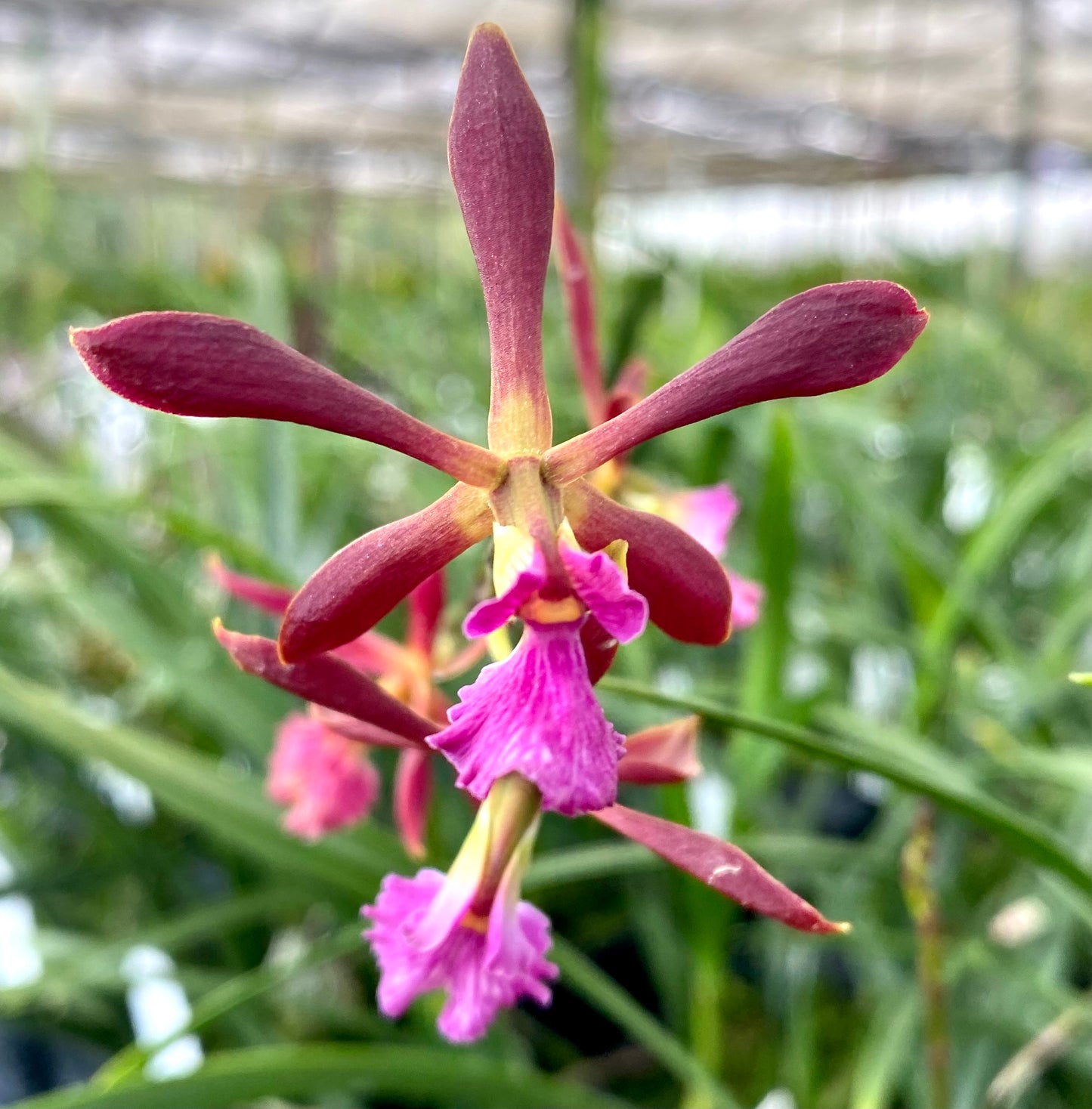
Encyclia bractescens x Nursery Rhyme
Encyclia bractescens x Nursery Rhyme
Couldn't load pickup availability
The orchid Encyclia bractescens x Nursery Rhyme is a captivating hybrid that blends the delicate charm of a miniature species with the robust character of modern breeding. The plant typically features small, rounded pseudobulbs topped with thin, grass-like foliage that creates a graceful, airy silhouette. The flowers are produced on slender, branching stems that can carry numerous blooms at once. Each blossom features narrow, sepals and petals in earthy bronze or mahogany tones, which provide a striking contrast to a prominent, spade-shaped lip that often displays intricate veining in shades of rose or magenta.
Quick Start Summary:
Light: Bright indirect light such as an east or shaded south window.
Temps: Intermediate to warm, ranging from 60 F at night to 85 F during the day.
Water: Allow the media to dry significantly between waterings.
Humidity: Moderate levels between 50 and 70 percent.
Fertilizer: Balanced orchid food applied weekly at half strength.
Media: Course bark mix or mounted on cork for excellent drainage.
🌺 Orchid Lore & Discovery
This hybrid brings together the heritage of Encyclia bractescens, a species native to the lowlands of Central America, with the playful lineage of Nursery Rhyme. The species parent is well-known among enthusiasts for its diminutive size and surprisingly fragrant, long-lasting flowers. By crossing it with Nursery Rhyme, breeders have aimed to enhance the color saturation of the lip and increase the overall floriferousness of the plant. The result is a selection that retains the wild, dainty aesthetic of a forest-dwelling orchid while offering the vigor and adaptability required for home cultivation.
🌿 How to Grow Encyclia bractescens x Nursery Rhyme
Light: This orchid thrives in bright, filtered light. Aim for conditions similar to what you would provide for a Cattleya, ensuring the plant receives plenty of energy to produce its impressive sprays of flowers without being exposed to harsh, direct midday sun which can scorch the thin leaves.
Water: Proper moisture management is the most critical aspect of caring for this hybrid. Because its ancestors often grow as epiphytes in seasonally dry forests, it prefers a distinct wet-to-dry cycle. Water the plant thoroughly and then allow the potting medium to become nearly dry to the touch before watering again.
Temps: It is quite adaptable to standard home temperatures. It enjoys daytime highs between 75 and 85 F and appreciates a slight drop in temperature at night, ideally staying above 60 F. This diurnal temperature swing helps trigger the development of new flower spikes.
Media: Given its need for rapid drying, a porous medium is essential. A mix composed of medium-grade fir bark, perlite, and charcoal works well to ensure oxygen reaches the roots. If you live in a high-humidity environment, these plants also perform exceptionally well when mounted on cork slabs or tree fern plaques.
Share