

Kalapana Orchid Farm
Masd. herradurae
Masd. herradurae
Couldn't load pickup availability
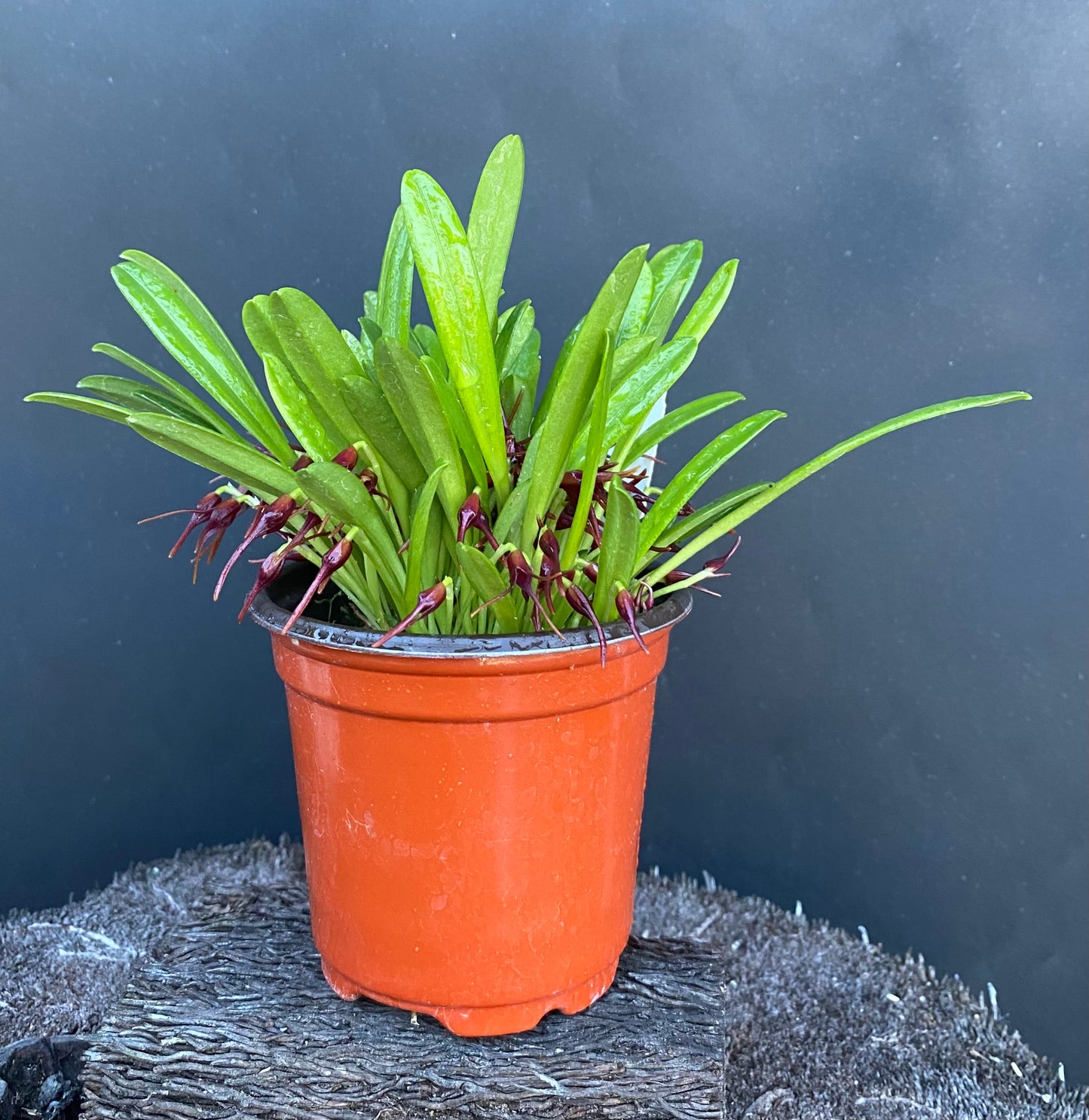
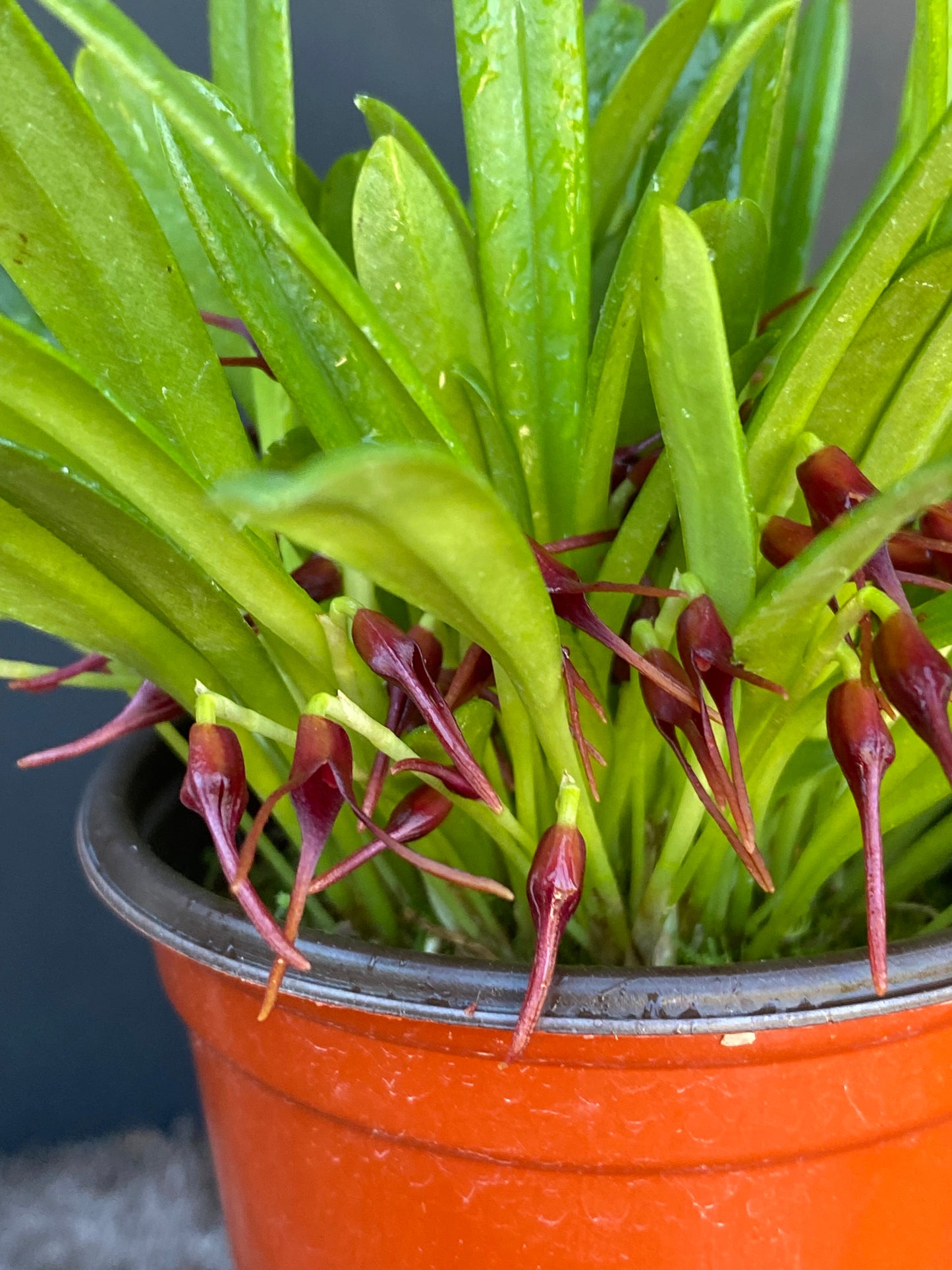
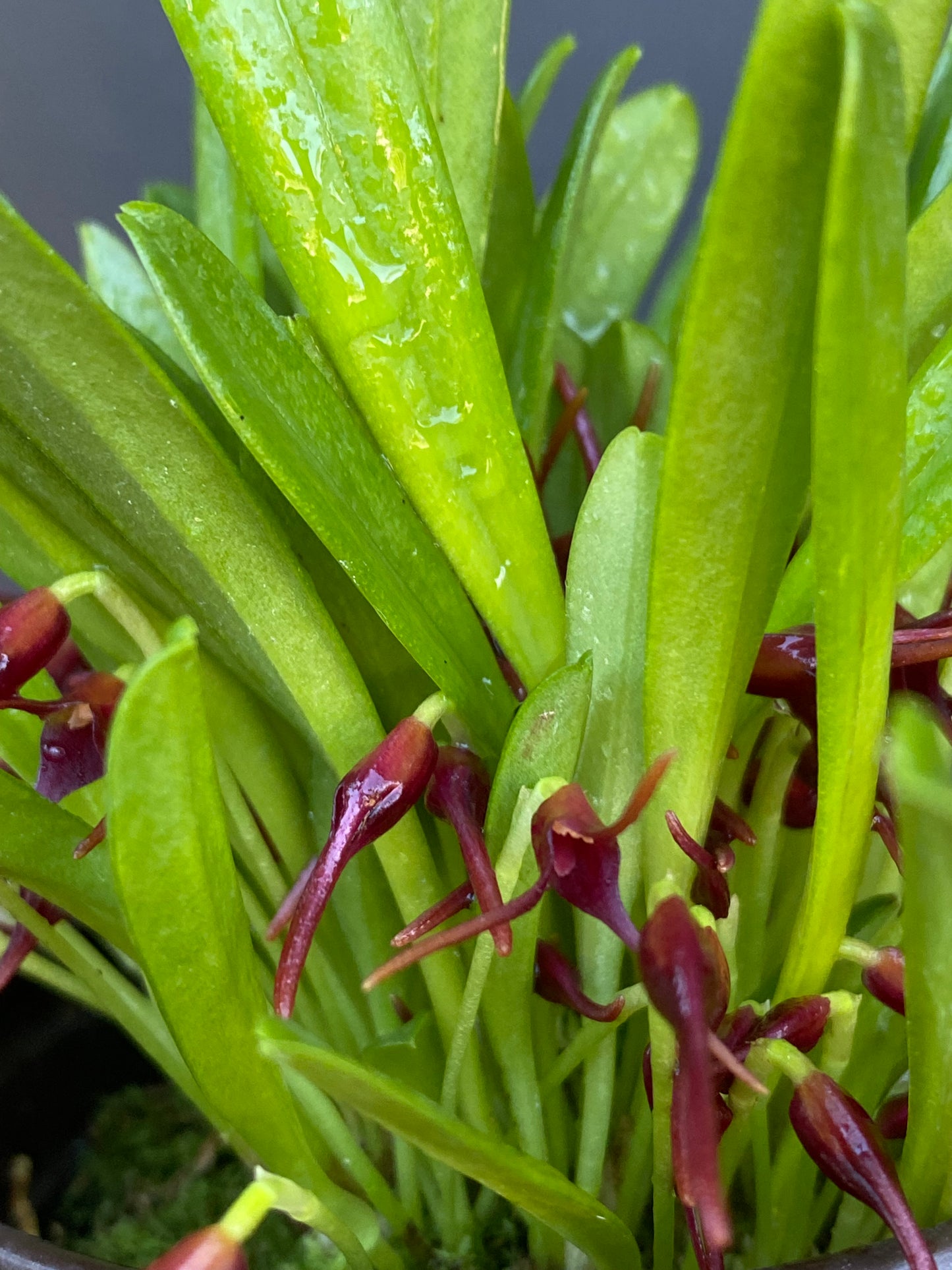
This miniature gem is highly prized for its unique floral presentation and subtle, earthy-cinnamon fragrance. The bloom is typically a rich reddish-orange to deep orange, often accented with flecks of a deeper red or purple. Its sepals are fused to form a distinctive cup-like flower, which has been described as resembling a small horseshoe, giving rise to its common name. The flowers are relatively large for the size of the plant, often appearing almost stemless nestled among the leaves. The foliage is compact, forming a dense clump of narrowly elliptic, deep green leaves that are leathery in texture and typically grow to about 3 to 5 in. in length. This is an excellent selection for growers with limited space, or for those who appreciate the intricacy of small orchids.
Quick Start Summary:
Light: Low to moderate, indirect light is ideal. Avoid harsh, direct sun which can easily burn the leaves.
Temps: Cool to intermediate conditions, with daytime temperatures between 65 and 75 F and nighttime temperatures between 55 and 65 F. Consistent coolness is key.
Water: Keep the root media consistently moist but never soggy. This species does not tolerate drying out completely. Use purified water like reverse osmosis or rainwater.
Humidity: High humidity, 70 percent or higher, is beneficial for this species. Good air movement is also essential to prevent fungal issues.
Fertilizer: Use a very dilute solution, about 1/8 to 1/4 strength, of a balanced orchid fertilizer once every two to three waterings, reducing frequency in winter.
Media: Fine bark mix, sphagnum moss, or a mix designed for fine-rooted, moisture-loving orchids. Repot annually to ensure the media is fresh.
🌺 Orchid Lore & Discovery
Masdevallia herradurae is a captivating species originating from the cool, cloud-laden forests of Colombia and Ecuador. It is found growing as an epiphyte, high up on mossy tree branches, or sometimes as a lithophyte on rocks, at elevations typically ranging from 5,900 to 9,800 feet. The species was first described in the mid-19th century. Its habitat of cool, constantly moist, and shaded cloud forests dictates its strict cultural requirements. The name herradurae comes from the Spanish word for "horseshoe," a reference to the distinctive shape of the fused sepals that form the flower.
🌿 How to Grow Masdevallia herradurae
Light: This species requires lower light levels than many other common orchids. Ideal placement is where it receives bright, indirect light, similar to what it would receive under the dense canopy of its native cloud forest. If using artificial lights, position the plant farther away than you would for Cattleya or Phalaenopsis. Too much light will cause the leaves to turn a sickly yellow-green or become burned.
Temps: Temperature is one of the most critical factors for success. This is a cool-growing orchid. Daytime temperatures should ideally stay below 75 F, and a significant drop at night, down to 55 F to 65 F, is necessary to encourage robust growth and flowering. It cannot tolerate prolonged exposure to temperatures above 80 F.
Water: Due to its fine, delicate roots and native habitat, Masdevallia herradurae must never be allowed to completely dry out. Water frequently, ensuring the potting media stays evenly moist. However, excellent drainage is also necessary to prevent root rot. Use only water with very low mineral content, such as rainwater or purified water, as this species is highly sensitive to hard water salts.
Humidity: High humidity is required to mimic its cloud forest home, ideally 70 percent or higher. This high moisture environment necessitates constant and gentle air movement, which helps prevent stagnant air and the development of fungal or bacterial diseases, especially on the flowers and new growth.
Fertilizer: Fertilize very sparingly. The delicate roots of this plant are easily damaged by excess salts. Use a balanced, water-soluble fertilizer at a low concentration, no more than 1/4 strength, during periods of active growth. Flush the media thoroughly with plain water once a month to prevent salt buildup.
Media: Because of its need for consistent moisture, a fine-grade potting mix is best. Options include fine orchid bark mixed with perlite, or pure sphagnum moss. Many growers prefer mounting this orchid on moisture-retaining plaques or growing it in shallow pots. Repotting should be done annually, or whenever the media begins to break down, as old media can quickly become acidic and harmful to the roots.
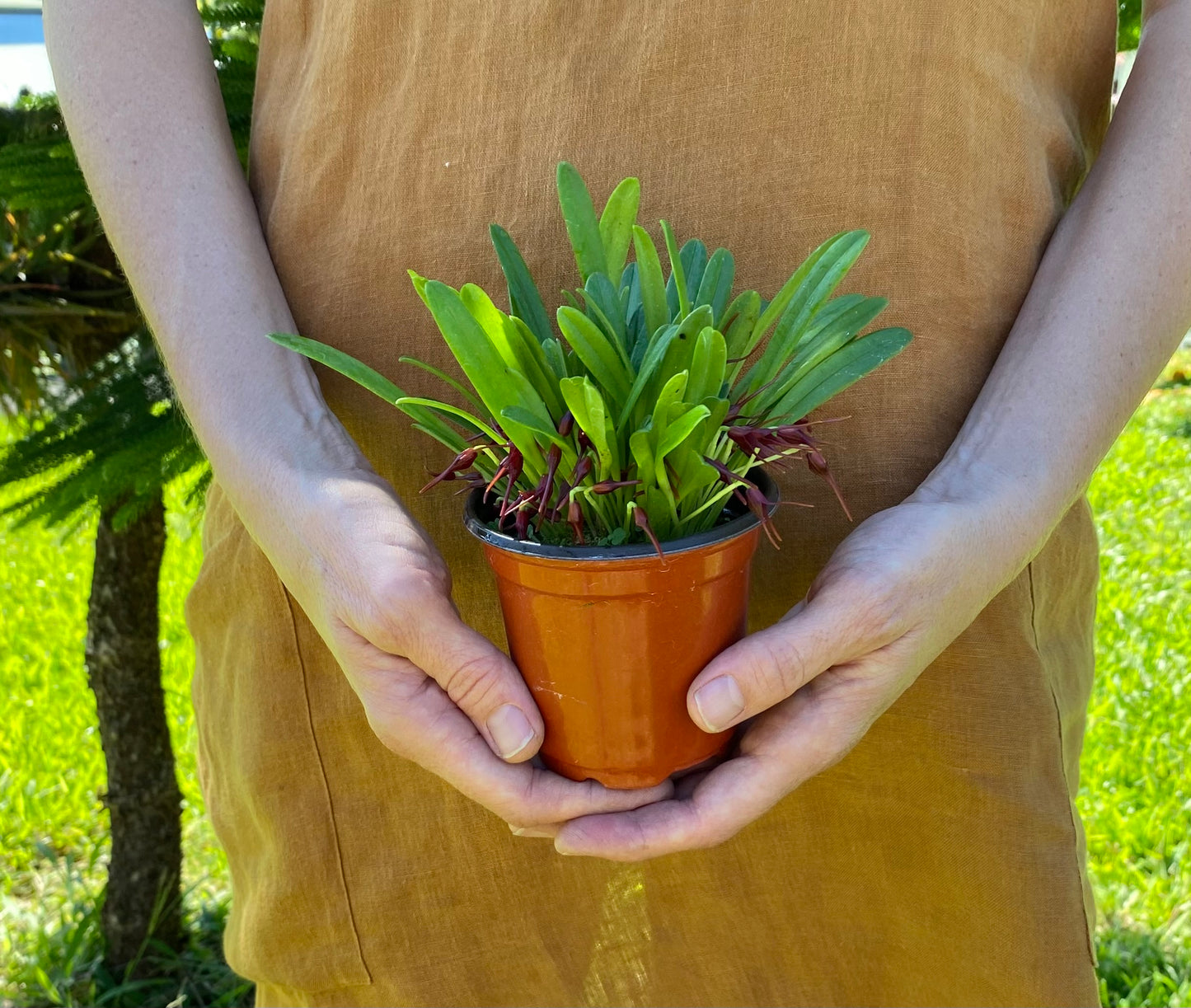
Grown in a 3" pot.
Share