
Kalapana Orchid Farm
Odcdm. Wildcat 'Bobcat'
Odcdm. Wildcat 'Bobcat'
Couldn't load pickup availability
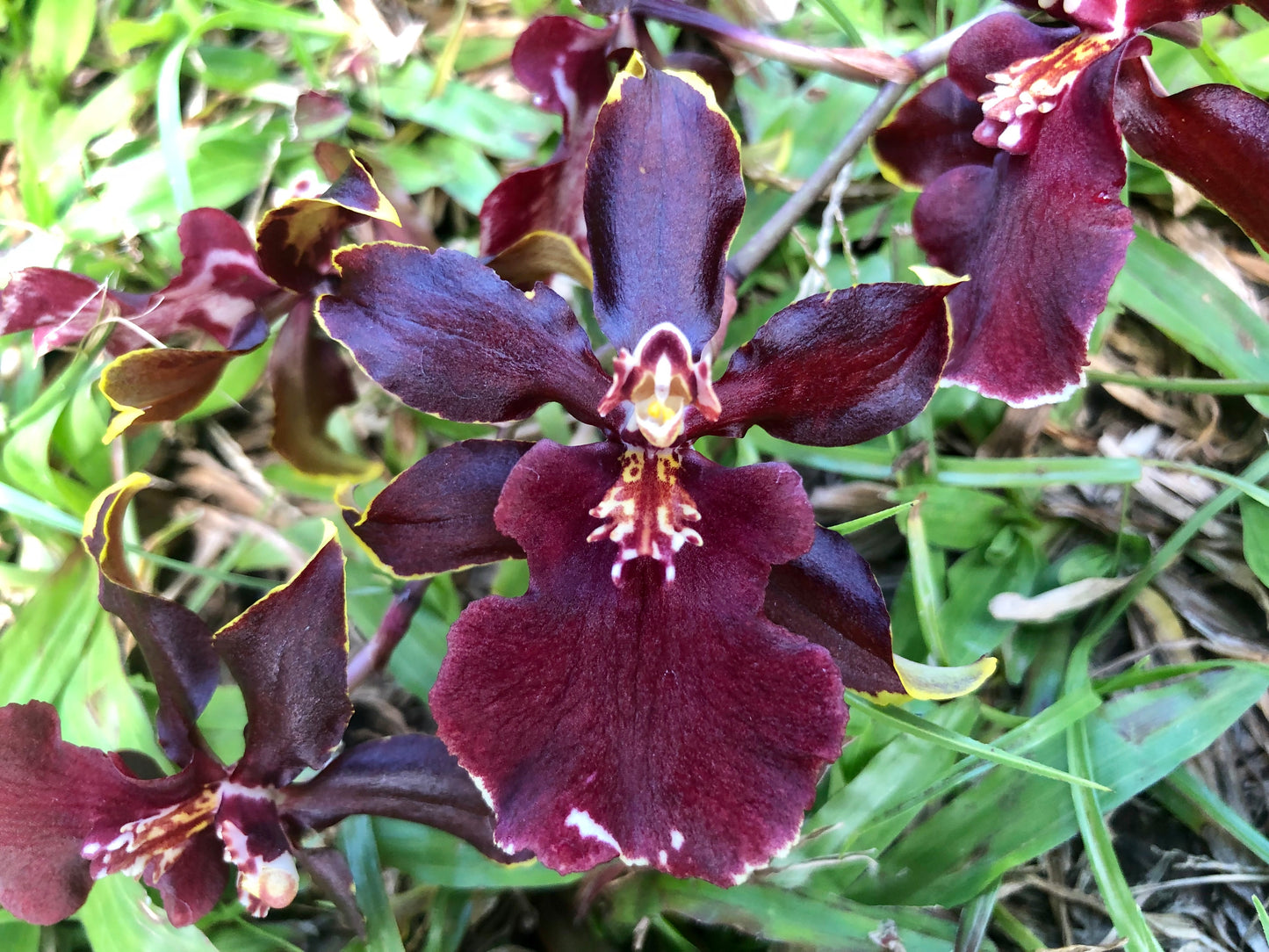
The Odontocidium Wildcat 'Bobcat' is a robust intergeneric hybrid renowned for its exceptionally dark, dramatic blooms and vigorous growth habit. The flowers are approximately 2 to 3 in. wide and feature a deep, velvety mahogany color that can appear almost black under certain lighting. These rich tones are often broken by intricate patterns of golden yellow on the sepals and lip. The plant produces plump, almond-shaped pseudobulbs that support two or three long, lance-shaped green leaves.
Quick Start Summary:
Light: Bright indirect light; avoid direct midday sun.
Temps: 60 to 80 F; prefers intermediate conditions.
Water: Water regularly to keep media slightly damp but not soggy.
Humidity: 50 to 70 percent.
Fertilizer: Half-strength balanced fertilizer every two weeks.
Media: Fine-grade bark mix with perlite or charcoal.
🌺 Orchid Lore & Discovery
The Odontocidium Wildcat 'Bobcat' is a complex intergeneric hybrid that combines the best traits of Odontoglossum and Oncidium. This specific cultivar was bred to possess the high flower count and ease of care associated with Oncidiums while capturing the large, flat flower shape and intense pigmentation of its Odontoglossum ancestors. Because of its diverse genetic background, the Wildcat series is famous for its adaptability, allowing it to flourish in a wider range of temperatures than many pure species. Its name, 'Bobcat', reflects the wild, spotted patterns and fierce color palette that make it a favorite among enthusiasts looking for a bold visual statement.
🌿 How to Grow Odontocidium Wildcat 'Bobcat'
Light: This orchid thrives in bright, diffused light. An ideal location provides plenty of brightness without the heat of direct sun, which can scorch the thin leaves. If the foliage develops a light reddish tint, it is receiving the maximum amount of light it can handle; if the leaves are very dark green and the plant fails to bloom, it should be moved to a brighter spot.
Temperature: Maintain intermediate temperatures between 65 and 80 F during the day. This hybrid is quite resilient, but it truly excels when it experiences a consistent 10 to 15 F drop in temperature at night. Providing this diurnal temperature swing is the most effective way to stimulate the development of the long, branching flower spikes.
Watering: Unlike orchids with thick, leathery leaves, this hybrid prefers a more consistent moisture level. The media should never be allowed to go bone-dry for extended periods. Water the plant just as the medium approaches dryness. If the new leaves begin to grow with a crinkled or "accordion" texture, it is a clear sign that the plant is not receiving enough water or that the humidity is too low.
Feeding: During the spring and summer months when the plant is pushing out new pseudobulbs, use a balanced orchid fertilizer at half-strength every two weeks. As the plant matures its growth in the fall, you can reduce feeding to once a month. Periodic flushing of the media with plain water is recommended to prevent mineral salt buildup, which can cause the tips of the leaves to turn brown.
Potting and Media: Because the roots of this hybrid are relatively fine, a fine-grade bark mix or a blend of bark and New Zealand sphagnum moss is preferred. These materials provide the necessary aeration while holding onto the moisture the plant requires. Repot every 12 to 18 months or when the potting medium begins to break down, as fresh media is essential for maintaining the health of the intricate root system.
Available in low-tight spike stage, well established in a 4" pot.
Share