

Kalapana Orchid Farm
Oncidium (Onc.) Pacific Pagan 'Kilauea'
Oncidium (Onc.) Pacific Pagan 'Kilauea'
Couldn't load pickup availability
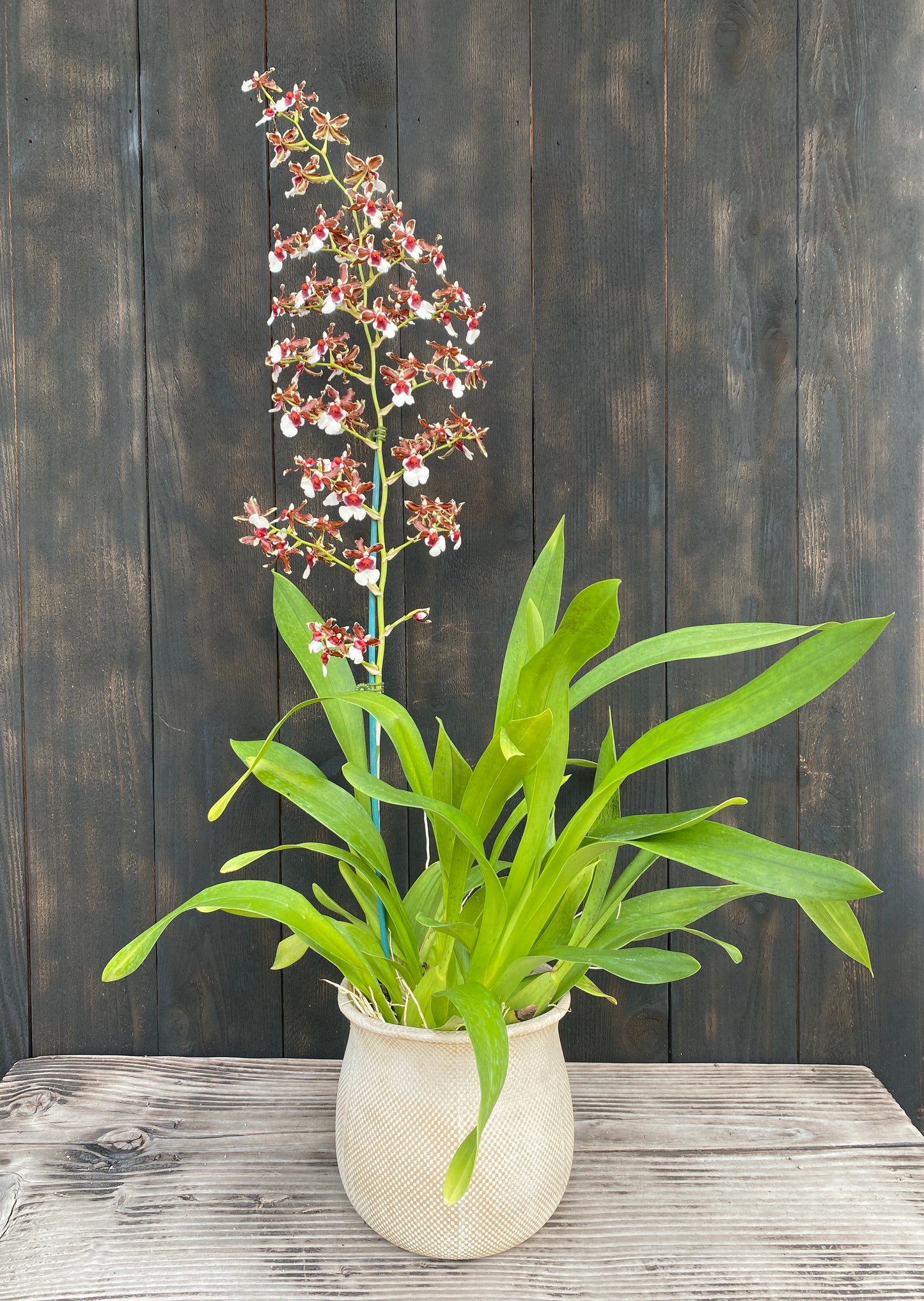
Oncidium Pacific Pagan Kilauea is a breathtaking example of the dancing lady orchid group, known for its prolific blooming and dramatic coloration. The flowers feature a stunning contrast of deep mahogany and burgundy tones against a crisp, snowy-white lip, which creates a sharp and sophisticated look. These blooms are produced in abundance on tall, upright, and branched spikes that display dozens of flowers simultaneously. Beyond its visual beauty, this variety is prized for being fragrant, adding a sweet sensory layer to its display. The plant itself is robust, with large, flattened pseudobulbs and long, strap-like emerald leaves that arch gracefully, making it an impressive sight even when not in flower.
Bred by the renowned James McCulley, Pacific Pagan is an excellent example of local Hilo floricultural excellence.
Quick Start Summary:
Light: Bright filtered light with good air movement.
Temps: 60 to 80 F.
Water: Water thoroughly when media is nearly dry.
Humidity: 50 to 70 percent.
Fertilizer: Half-strength balanced fertilizer every two weeks.
Media: Medium-grade orchid bark or a bark and perlite mix.
🌺 Orchid Lore & Discovery
The Oncidium Pacific Pagan Kilauea is a hybrid bred to capture the wild intensity of the Oncidium species found throughout the tropical Americas. Its cultivar name, Kilauea, serves as its namesake to honor the fiery energy and rich, dark colors found in volcanic regions, though this specific variety stands out for its elegant white labellum. This orchid belongs to the Oncidium alliance, a group celebrated for its ease of growth and its ability to produce multitudes of intricate flowers on a single branched spike. It has become a favorite among indoor growers for its reliable nature, delightful fragrance, and the striking visual impact of its high-contrast floral patterns. Bred by the renowned James McCulley, Pacific Pagan is an excellent example of local Hilo floricultural excellence.
🌿 How to Grow Oncidium Pacific Pagan Kilauea
Light: This orchid enjoys bright, indirect light. A spot that receives plenty of morning sunlight is perfect, but it should be protected from the intense rays of the afternoon sun. If the foliage is a light, grassy green, the light levels are ideal. Dark green leaves usually indicate that the plant would benefit from a brighter location to maximize its blooming potential and fragrance production.
Temperature: Intermediate temperatures are best for this variety. It thrives when daytime temperatures are between 75 and 80 F, with a cool-down at night to around 60 or 65 F. This temperature dip is often the key to encouraging the plant to send up its impressive flower spikes during the blooming season.
Watering: Oncidium orchids have pseudobulbs that store water, meaning they can handle a bit of drying out. Water the plant when the potting medium feels mostly dry to the touch, usually every 5 to 7 days depending on your home environment. During the winter rest period, reduce watering slightly, but never allow the pseudobulbs to become severely shriveled.
Humidity: Aim for a humidity level of at least 50 percent. This orchid appreciates a humid environment, which can be achieved by using a humidity tray or placing the plant near other tropical greens. Good air circulation is essential to keep the air fresh around the leaves and prevent any moisture from sitting too long on the foliage.
Fertilizer: Use a balanced orchid fertilizer at half strength every other week while the plant is actively growing new leaves or pseudobulbs. It is helpful to rinse the potting media with clear water once a month to wash away any residual fertilizer salts that could potentially burn the fine roots of the plant.
Potting: A well-draining medium-grade bark mix is the best choice for this orchid. It prefers to have its roots snug in the pot, so only move it to a larger container when the pseudobulbs begin to grow over the edge of the pot. Repotting is most successful when performed just as new growth and fresh roots begin to appear at the base of the plant.
Beautifully grown in 4" pots, currently available in low-medium spike. Please note, last photo with fully-opened inflorescence is an example of a mature, specimen-sized plant. Photo of plant in spike is an example of our current crop, with robust pseudobulbs and gorgeous, healthy foliage.
Share