

Kalapana Orchid Farm
Osp. Mayor Billy
Osp. Mayor Billy
Couldn't load pickup availability
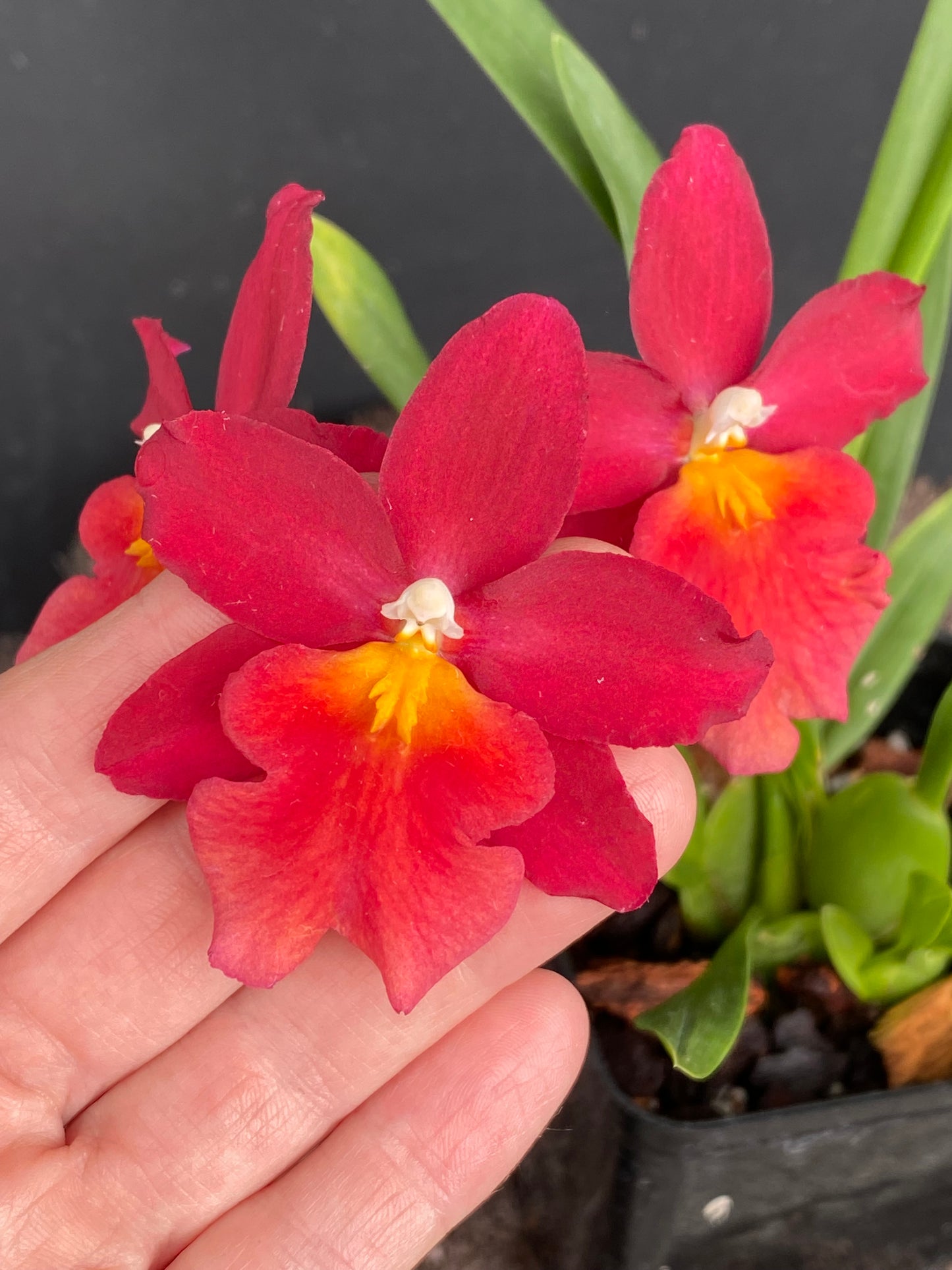
Meet Oncostelopsis Mayor Billy, a delightful modern hybrid in the Oncidiinae alliance, known for its vibrant display. This orchid, registered by Mauna Kea Orchids in 2019, honors the late Mayor Billy Kenoi of Hawaii Island, capturing his bright spirit and community aloha in its dynamic colors.
Oncostelopsis Mayor Billy is a cross of Oncostele Warm Memories and Oncidopsis Francine. To appreciate its lineage, we can delve into its key contributing species. From Oncidium noezlianum, hailing from Peru and Bolivia, which typically grows epiphytically in cloud forests at elevations of 5,000 to 10,000 feet, experiencing cool to intermediate temperatures (days in the 70s°F, nights in the 50s°F). Oncidium alexandrae (also known as Odontoglossum crispum), a classic from the Andes of Colombia, thrives in cloud forests at similar elevations of 6,000 to 10,000 feet, preferring cool temperatures (days in the 60s°F, nights in the 40s°F). And finally, Miltoniopsis bismarckii (formerly Miltonia bismarckii), found in Peru, Bolivia, and Brazil, which grows in intermediate to cool conditions.
The flowers of Oncostelopsis Mayor Billy are truly striking, typically around 2 inches in diameter. They bloom in sprays, presenting a captivating palette of pinky-red petals and sepals. The lip is a harmonious blend of yellow, peach, and blush red, creating a vibrant focal point. While not consistently fragrant, some individuals may offer a subtle, sweet aroma, adding to their charm. The plant itself is of a compact, blooming size, reaching an average height of 17 to 20 inches. The foliage consists of oblong to lanceolate leaves, typically a medium to dark green, arising from plump pseudobulbs that store water and nutrients. This orchid can produce multiple new pseudobulbs, leading to a robust and floriferous specimen. Expect blooms to last up to a month, providing a prolonged period of color.
Care Instructions:
Light: Bright, indirect light is ideal. An east-facing window or a shaded south/west window works well. Avoid direct, harsh sun, which can scorch the leaves.
Water: Water thoroughly when the potting medium is nearly dry. For plants in bark, this might be every 5-7 days depending on your environment. Roots should not sit in soggy conditions, but they also should not remain bone dry for extended periods. Reduce watering slightly during cooler, less active growth periods.
Temperature: Intermediate to cool temperatures are preferred. Daytime temperatures of 65-80°F and nighttime temperatures of 55-65°F are generally suitable. Avoid extremes.
Humidity: Moderate to high humidity, between 50-70%, is beneficial. A humidity tray or nearby humidifier can help achieve this, especially in drier climates. Good air circulation is also important to prevent fungal issues.
Potting Medium: A well-draining, moisture-retentive medium is best. Fine to medium-grade fir bark, mixed with perlite or charcoal, is often used. Some growers have success in sphagnum moss, especially in drier environments, provided care is taken not to overwater.
Fertilizer: During active growth (spring and summer), fertilize every two to four weeks with a balanced orchid fertilizer at a diluted strength (e.g., 1/4 to 1/2 strength). Reduce or cease fertilizing during dormancy or periods of low growth.
Offered in 4" pots
Share