

Kalapana Orchid Farm
Phaiocalanthe Kryptonite 'Parkside' AM/AOS -Limited
Phaiocalanthe Kryptonite 'Parkside' AM/AOS -Limited
Couldn't load pickup availability
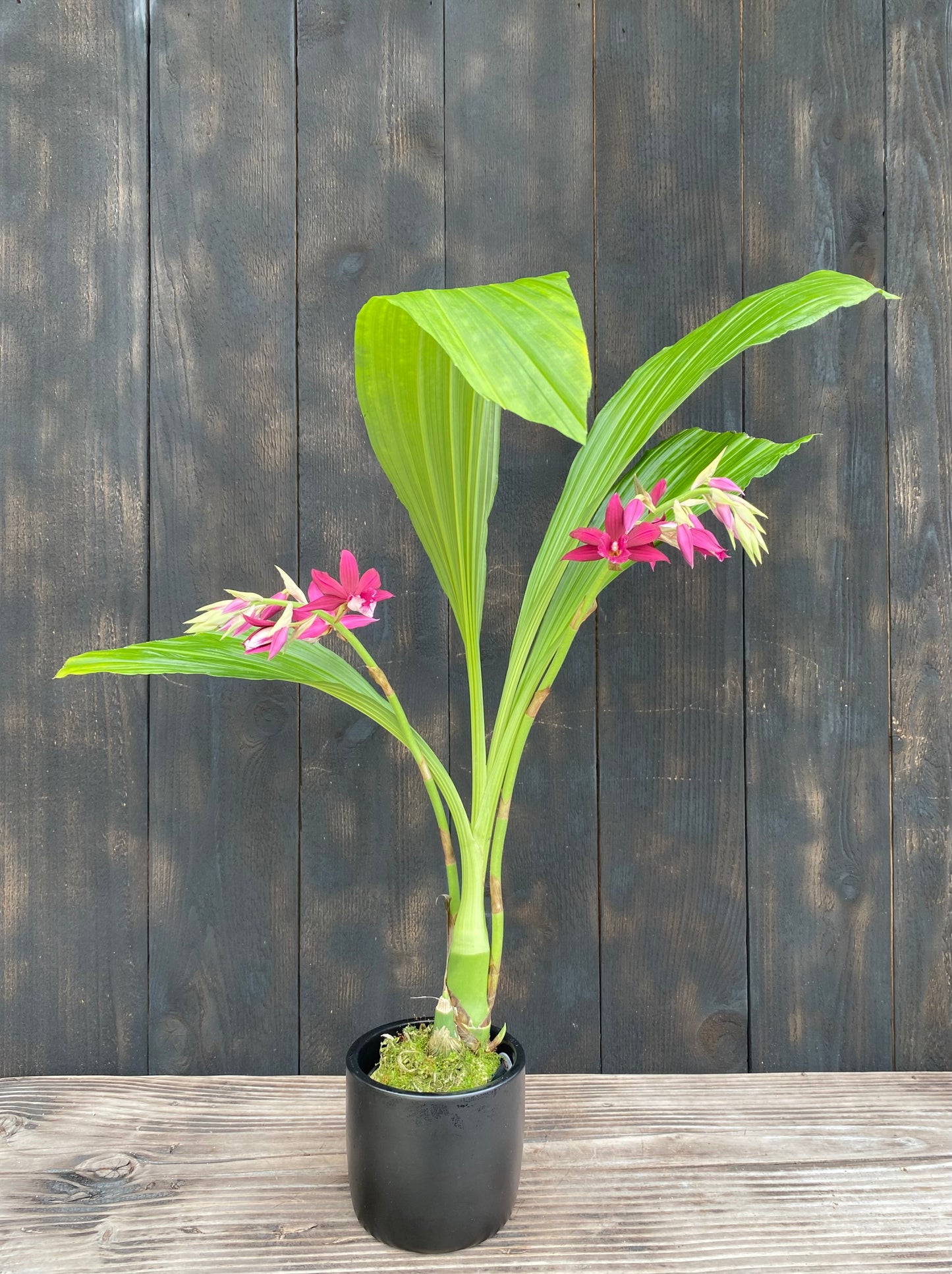
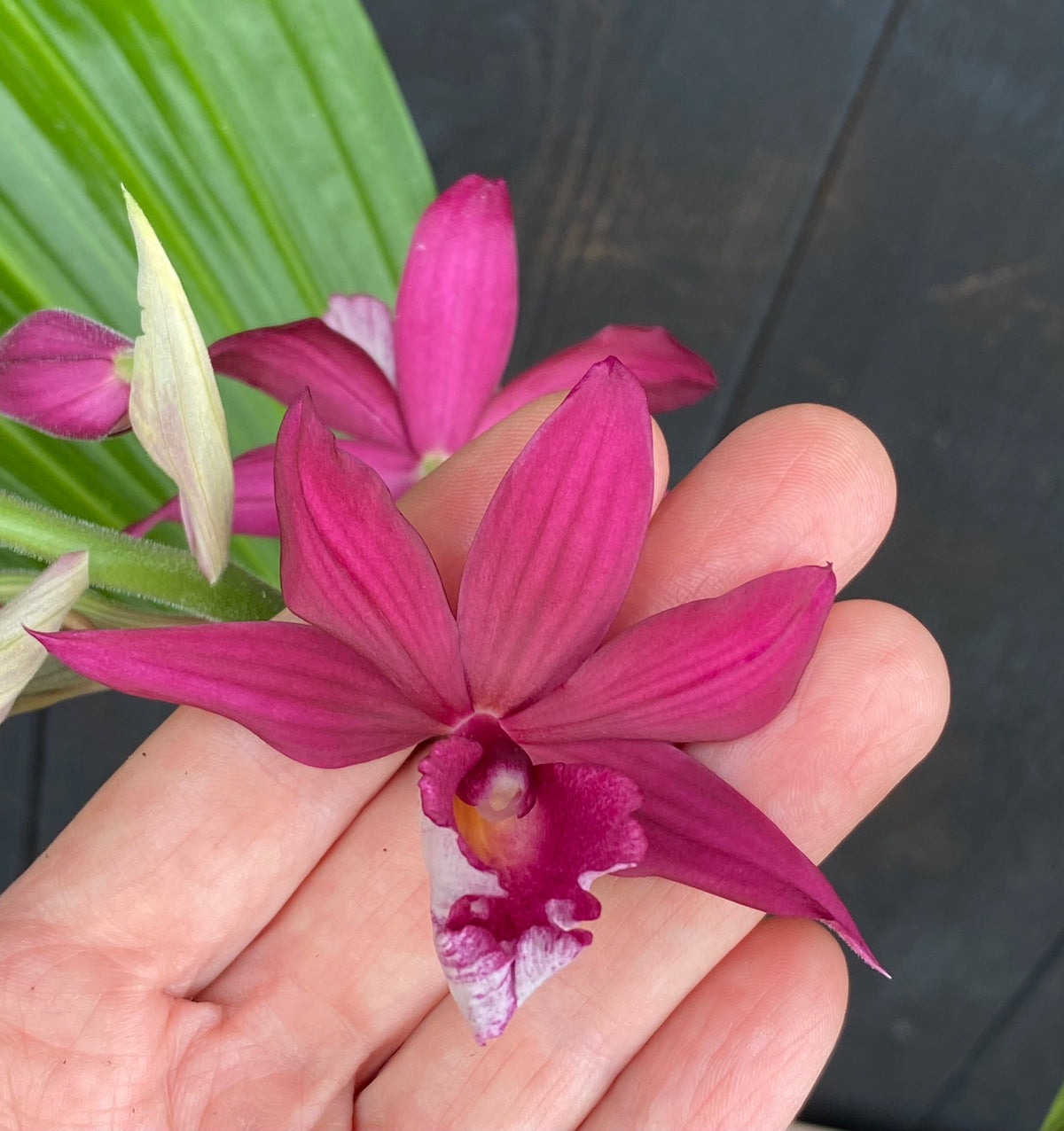
The Phaiocalanthe Kryptonite ‘Parkside’ AM/AOS is an exceptional terrestrial hybrid, recognized for its dramatic and richly colored blooms. The flowers are a striking deep magenta-pink, with the petals and sepals being broad and slightly reflexed, creating a bold, open presentation. The lip is a complex blend of colors, featuring a deep magenta mid-lobe that transitions to a broad, creamy-white or pale yellow apron at the tip, which is often heavily speckled or veined with a darker purplish-pink pattern. The throat of the flower has a yellow-orange callus, adding a beautiful contrast. The blooms are borne on strong, upright spikes that rise above the foliage. The plant itself is robust and develops large, pleated, paddle-shaped leaves that can reach substantial height, giving the plant a distinctive tropical look even when not in bloom.
Quick Start Summary:
Light: Bright, indirect light, similar to a Cattleya or Phalaenopsis
Temps: Intermediate to warm, 55 F to 85 F, avoid frost
Water: Keep consistently moist during active growth (spring through fall); reduce in winter when pseudobulbs mature
Humidity: 50% to 70% is ideal, good air movement is essential
Fertilizer: Balanced orchid fertilizer every watering during growth, flushed once a month
Media: Free-draining mix like medium-grade bark, charcoal, and perlite
🌺 Orchid Lore & Discovery
This impressive plant is a primary cross between Calanthe vestita and Phaius tankervilleae, with subsequent breeding leading to the Phaiocalanthe Kryptonite grex. The awarded clone ‘Parkside’ is particularly known for its exceptional flower size and intense coloration. Phaius and Calanthe species are predominantly terrestrial or semi-terrestrial orchids. Phaius tankervilleae, one of the parents, is famously known as the Chinese Ground Orchid, originating from a wide range across tropical Asia and Australia. Calanthe vestita is also a ground orchid found in Southeast Asia, appreciated for its fringed lip and tendency to drop its leaves (deciduous) before or during blooming. This hybrid successfully merges the impressive flower size and stature of Phaius with the vibrant color and robust growth habit found in many Calanthe hybrids.
🌿 How to Grow Phaiocalanthe Kryptonite ‘Parkside’ AM/AOS
Light: Provide bright, indirect light. Direct sun should be avoided, especially midday sun, as it can burn the pleated leaves. An east or west-facing window is often suitable, or a shaded south exposure. Insufficient light will result in weak growth and a failure to set flower buds.
Temps: This orchid prefers intermediate to warm temperatures. Daytime temperatures between 70 F and 85 F are ideal, with a nighttime drop into the 55 F to 65 F range. A cooler, drier rest period in the winter can help stimulate robust flowering, but the plant must be protected from temperatures below 50 F.
Water: Watering must be carefully adjusted according to the plant’s seasonal growth cycle. When new shoots emerge in spring, water generously and keep the potting media evenly moist throughout the summer and fall to allow the pseudobulbs to swell. Once the growth matures and the leaves may begin to senesce in late fall or early winter, drastically reduce watering. Resume a regular, generous watering schedule when a new flower spike or vigorous new vegetative growth is clearly seen.
Humidity: A humidity level between 50% and 70% is beneficial for healthy foliage and growth. If grown indoors, placing the pot on a tray of moist pebbles, ensuring the pot bottom is above the water line, can help maintain local humidity. Strong air circulation is non-negotiable, particularly in high humidity conditions, to prevent fungal or bacterial issues on the large leaves.
Fertilizer: During the active growth period, from spring through fall, use a balanced orchid fertilizer at half strength with nearly every watering. It is important to flush the pot with plain water once a month to prevent the buildup of mineral salts. Fertilizing should be reduced to clear water once a month, or stopped completely, during the plant’s winter rest period.
Media: A rich, yet extremely well-draining potting media is crucial for this semi-terrestrial orchid. A mix of medium-grade orchid bark, perlite, horticultural charcoal, and possibly some coconut husk chips or sphagnum moss works effectively. The plant should be repotted when the new growth starts or when the media has decomposed, typically every one to two years.
These are impressively large plants, in bud. They are currently in 4" pots and ready to be up-potted once their blooming season is complete.
Share