
Kalapana Orchid Farm
Rlc. Heavenly Sweet Volcano Queen
Rlc. Heavenly Sweet Volcano Queen
Couldn't load pickup availability
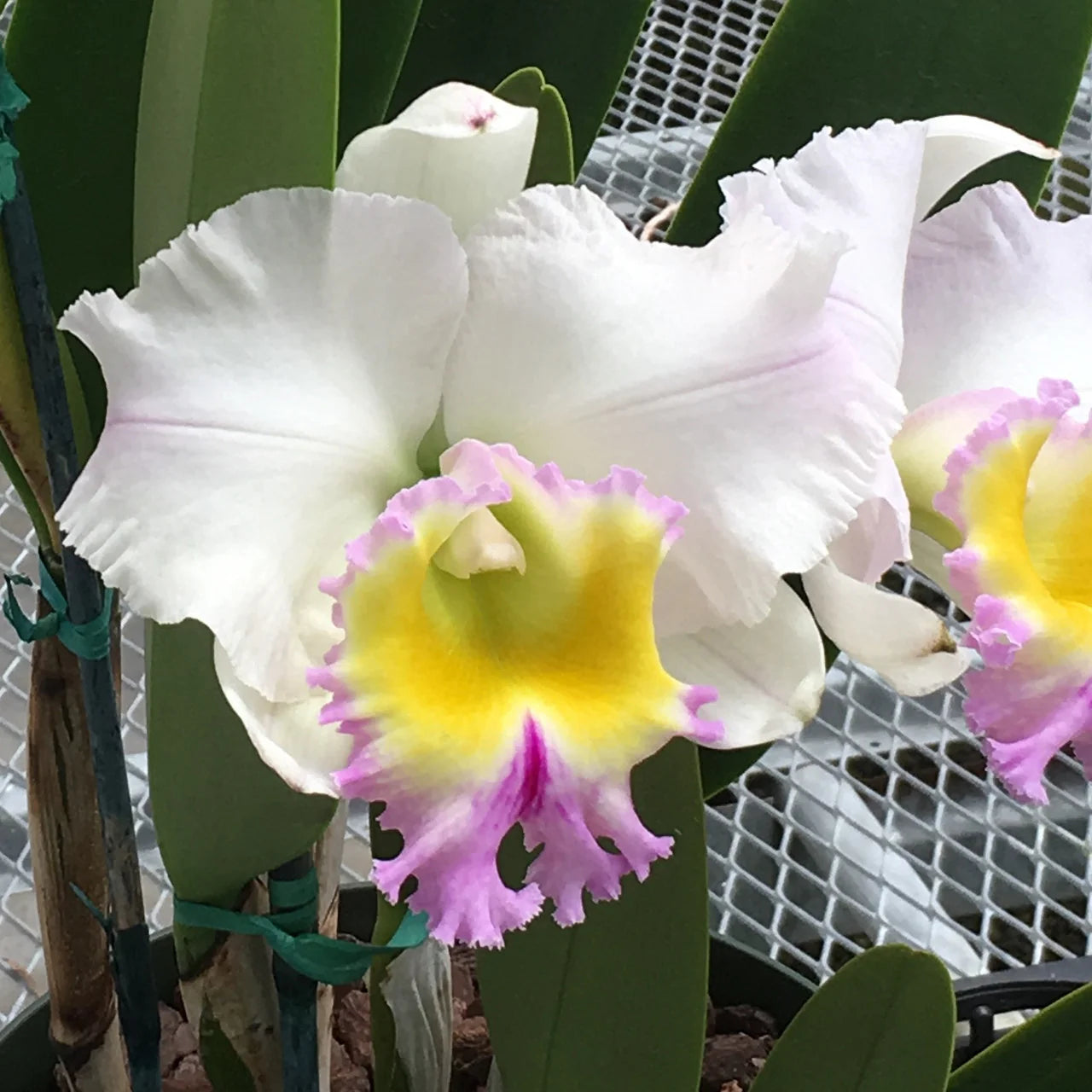
This remarkable hybrid, Rlc. Heavenly Sweet Volcano Queen, presents a truly dramatic floral display. The large, fragrant flowers typically span 6 to 7 in. across, exhibiting a stunning palette of deep lavender-purple with striking, ruffled magenta-red lips. The petals and sepals are broad and well-formed, lending a magnificent, full appearance to each bloom. The plant is a vigorous grower, developing robust pseudobulbs that support the impressive flower spikes. Its foliage is thick and leathery, a characteristic trait of its parentage, growing upright and remaining a vibrant green throughout the year, providing a handsome appearance even when not in flower.
Quick Start Summary:
Light: Bright, indirect light, similar to a south or east-facing window
Temps: Intermediate to warm; ideal range is 60 to 85 F
Water: Water thoroughly when the potting mix is nearly dry; allow for a slight drying period between waterings
Humidity: 50% to 70% is best; use a humidity tray or room humidifier if necessary
Fertilizer: Balanced orchid fertilizer at half strength every other watering during active growth
Media: Coarse orchid bark mix or a bark and perlite blend that drains very quickly
🌺 Orchid Lore & Discovery
Rlc. Heavenly Sweet Volcano Queen is a complex modern hybrid resulting from the cross of Rlc. Kat E-Sook and C. labiata. The influence of C. labiata is especially evident in the large flower size, rich coloration, and strong fragrance. Cattleya labiata, known as the Autumn Cattleya, was one of the first Cattleya species discovered in the early 19th century and is native to the Atlantic forest regions of northeastern Brazil. This species grows epiphytically on trees, thriving in environments with bright light, warm temperatures, and a distinct dry period in winter. This heritage contributes to the hybrid’s spectacular, showy blooms and its preference for intermediate to warm conditions with excellent drainage.
🌿 How to Grow Rlc. Heavenly Sweet Volcano Queen
Light: Provide bright, indirect light for best flowering results. Insufficient light will result in the plant failing to bloom, while direct, harsh midday sun can burn the leaves. Filtered light, such as that provided by sheer curtains in a south-facing window or an unobstructed east-facing window, is generally ideal. The leaves should be a medium olive-green, indicating sufficient light.
Temps: This orchid prefers intermediate to warm temperatures. The ideal range is a daytime high between 75 and 85 F and a nighttime low between 60 and 65 F. A temperature drop of 10 to 15 F between day and night is important year-round to encourage blooming. Avoid exposure to temperatures below 55 F, which can cause damage.
Water: Water the plant generously when the potting mix has approached dryness. This orchid does not like to remain soggy but should not be allowed to dry out completely for extended periods. During active growth (spring and summer), watering will be more frequent. Reduce the frequency slightly in the winter months, especially if cooler temperatures are maintained.
Humidity: Maintain humidity levels between 50% and 70%. In a home environment, a humidity tray filled with pebbles and water (ensuring the pot does not sit in the water) or a small room humidifier will help achieve this. Good air circulation is essential to prevent fungal issues in high humidity.
Fertilizer: Feed the orchid with a balanced, water-soluble orchid fertilizer, diluted to half the recommended strength, every other time you water during the active growing season. Flush the pot with plain water once a month to prevent the buildup of fertilizer salts in the media. Reduce or cease feeding during the rest period in late fall and winter.
Media: Use a free-draining medium, such as coarse-grade fir bark, charcoal, or a mix of bark and perlite. Repotting should be done when new root growth is just beginning, typically in the spring, and only when the current medium has begun to decompose or the plant is growing out of its pot. Do not over-pot; select a container that allows for one to two years of new growth.
Currently available in blooming size only, no flower buds or spikes.
Share