

Kalapana Orchid Farm
Rlc. Siam Skyline 'Coffee Prince'
Rlc. Siam Skyline 'Coffee Prince'
Couldn't load pickup availability
The striking flowers of Rlc. Siam Skyline 'Coffee Prince' present a beautiful blend of deep color. The petals and sepals are a rich, velvety burgundy-red, often exhibiting a subtle darker veining that adds depth to the overall appearance. The large, flared labellum, or lip, is typically a contrasting golden-yellow or apricot with fine red-purple striations radiating from the throat, creating a dramatic focal point. These impressive blooms can measure 6 to 7 in. across and are held on sturdy stems, usually producing one to two flowers per spike.
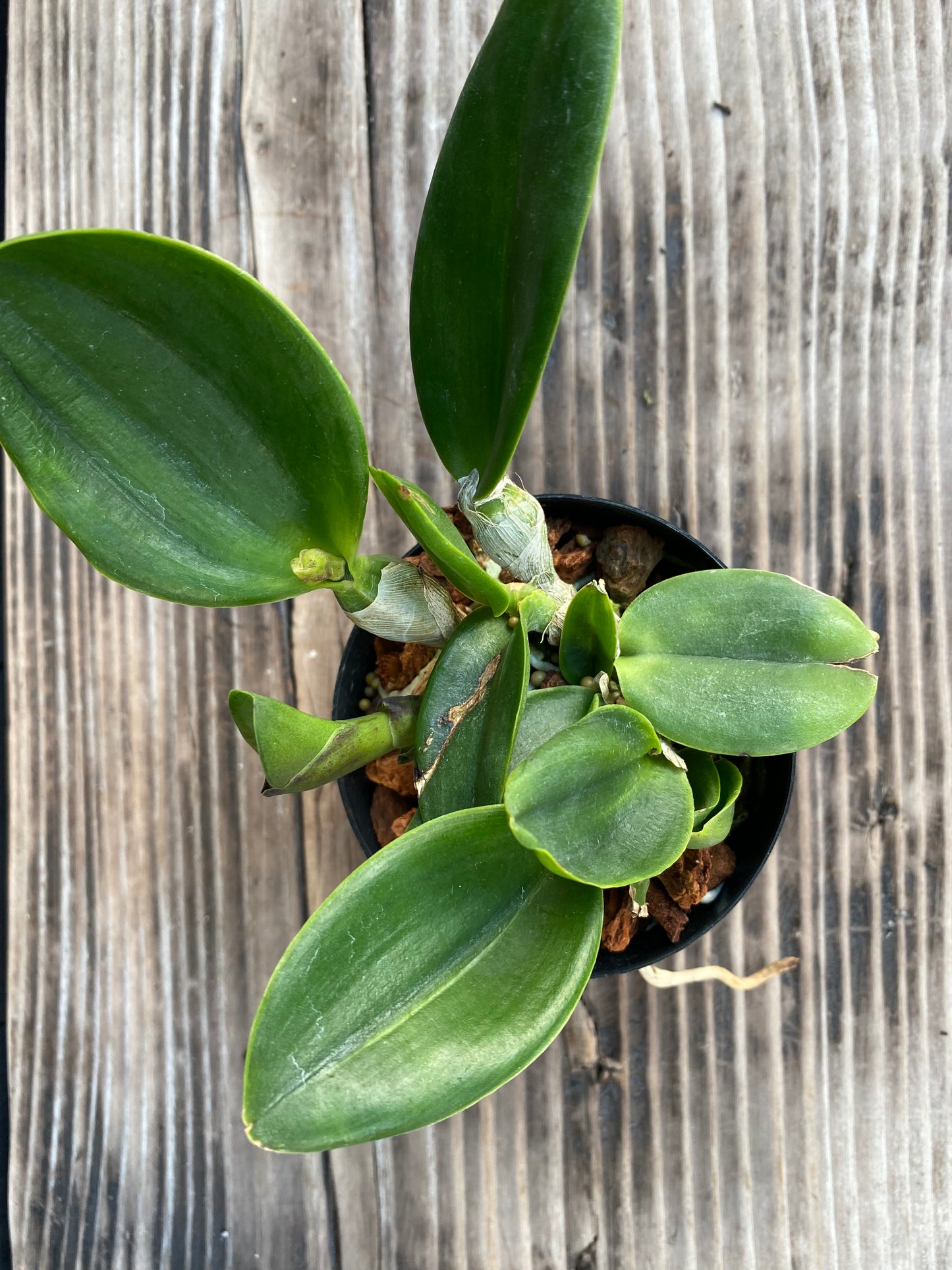
The plant itself displays the classic pseudobulb growth habit characteristic of many large Cattleya hybrids. The foliage is thick, leathery, and dark green, growing upright from the plump pseudobulbs. This robust growth habit makes for a substantial, handsome plant even when not in flower. The thick leaves are quite tolerant of bright light and contribute to the plant's overall hardiness.
Quick Start Summary:
Light: Bright, indirect light, equivalent to a south or east window; direct morning sun is beneficial.
Temps: Warm temperatures are preferred, ideally 60 F to 85 F. Avoid temps below 55 F.
Water: Water thoroughly when the media is nearly dry, approximately every 5 to 10 days, depending on conditions.
Humidity: Moderate to high humidity, 50% to 70%, is ideal for growth.
Fertilizer: Apply a balanced fertilizer (e.g., 20-20-20) diluted to half strength weekly or a full strength application monthly during the active growing season.
Media: A coarse, well-draining mix such as medium fir bark or lava rock/charcoal blend. Repot when new growth emerges.
🌺 Orchid Lore & Discovery
Rlc. Siam Skyline 'Coffee Prince' is a modern hybrid, not a naturally occurring species. It is the result of crossing Rlc. Waianae Comet with Rlc. Love Sound. This lineage combines vigorous growth and large flower size, typical of many successful Rhyncholaeliocattleya (Rlc.) crosses, with the robust color saturation evident in the 'Coffee Prince' clone. The hybridization process allows breeders to select for desirable traits like flower count, size, color intensity, and fragrance, ensuring this hybrid delivers an exceptional display that far exceeds the characteristics of its distant species ancestors like Cattleya labiata or Rhyncholaelia digbyana.
🌿 How to Grow Rlc. Siam Skyline 'Coffee Prince'
Light: Provide bright, indirect light. An ideal location would be a south or east-facing window where the plant receives direct morning sun but is shielded from harsh midday and afternoon light. Leaves should be a medium, slightly yellow-green color; very dark green leaves indicate insufficient light, which will inhibit flowering.
Temperature: This hybrid prefers intermediate to warm conditions. Daytime temperatures should be between 70 F and 85 F, with a night temperature drop of 10 F to 15 F, ideally down to 60 F to 65 F. Consistent temperatures below 55 F should be avoided as they can damage the plant and prevent blooming.
Water: Water generously, allowing water to flow through the pot, but always allow the growing media to approach dryness before watering again. This typically means watering every 5 to 10 days, depending on the air temperature and the media's capacity to dry out. Overwatering, especially during cooler months, is the most common cause of root rot.
Humidity: Maintain relative humidity between 50% and 70%. In lower humidity environments, placing the potted plant on a shallow tray of pebbles with water can help increase local moisture, ensuring the bottom of the pot does not sit directly in the water. Good air movement is essential to prevent fungal or bacterial spots, especially in high-humidity conditions.
Fertilizer: During the periods of active growth (usually spring through fall), feed weekly with a water-soluble fertilizer diluted to half the recommended strength, or once a month at full strength. Use a balanced formula like 20-20-20 or an orchid-specific formulation. Reduce or stop fertilizing during the winter rest period or when the plant is not actively producing new roots or growths.
Media and Repotting: Use a coarse, free-draining medium such as medium-grade fir bark, lava rock, or a mixture of the two. Repot only when new root growth is just beginning to emerge from the base of the pseudobulb. Repotting while the plant is actively rooting or spiking can damage the delicate new tissues.
Beautifully grown in 4" pots, currently available in blooming size only.
Share